Parages
Rooted in Contextual Understanding
New French Architecture
An Original Idea by New Generations
RĂŠseaux
A multilayered approach to complexities
FMAU
A Practice in Motion
Bhaskar Architecture
Driven by Ethics, Creativity, and Purpose
Roofscapes
Echoes of the Earth Above
Martial Marquet
Where Design and Community Converge
Samuel Gloess Architectes
Architecture That Moves With the Future
Upsilon
Material Intelligence as Practice
UR
Integrated, Multiscalar Thinking
AspaĂŻ Architectes
Balancing Heritage and Innovation
OAR / OFFICE ABRAMI ROJAS
Starting Small, Thinking Deep
eluaÂŽ
Cinematic Practice
asnĂŠ achitecture
Material Roots, Precise Vision
Studio Classico
Breaking conventions with Studio Classico
Gwendoline Eveillard Studio
The Challenge of Reuse
KIDA
From Playground to Practice
atelier mura scala
Aiming at Peripheral Futures
rerum
A Laboratory for Urban Transformation
Le Studio Sanna BaldĂŠ
Bodies and Communities, First
QSA
A Journey of Reinvention and Adaptation
LDA Architectes
Practising Responsiveness
Atelier Sierra
Geographies of Practice
nicolas bossard architecture
Evolution: Flat by Flat
Compagnie architecture
Culture on Site
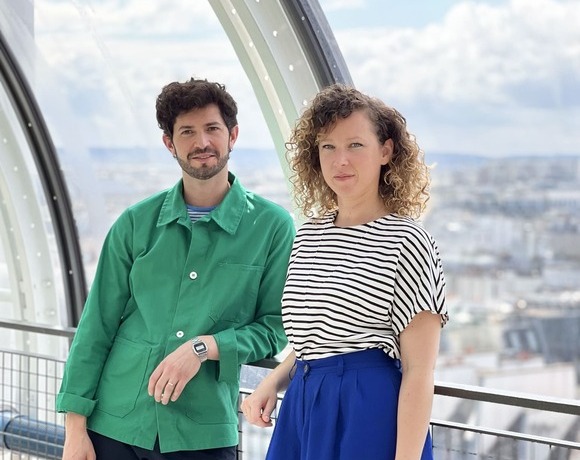
Studio AlbĂŠdo
Strategic Acts of Architecture
FabricarĂŠ
Simplicity and Singularity In the Making
Renode
Renovation as Quiet Resistance
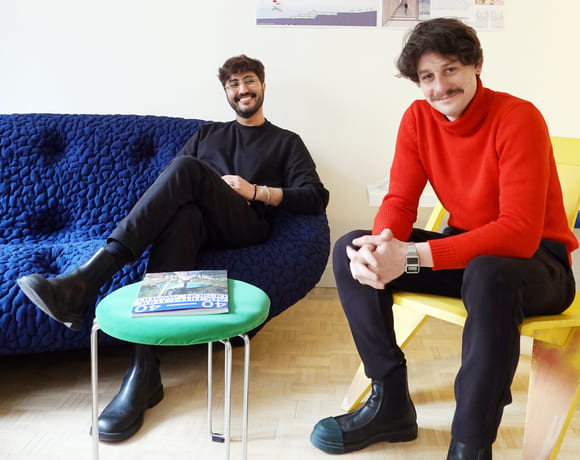
Kapt Studio
Pushing Boundaries Across Scales
Room Architecture
Between Theory, Activism, and Practice
AVOIR
Structural Unknowing
DRATLER DUTHOIT architectes
Crafting Local Language
Claas Architectes
Building with the Region in Mind
B2A - barre bouchetard architecture
Embracing Uncertainty in Architecture
AcmĂŠ Paysage
Nurturing Ecosystems
Atelier Apara
Architecture Through a Pedagogical Lens
HEMAA
Designing for Ecological Change
HYPER
Hyperlinked Scales
Between Utopia and Pragmatism
Oblò
Dialogue with the Built World
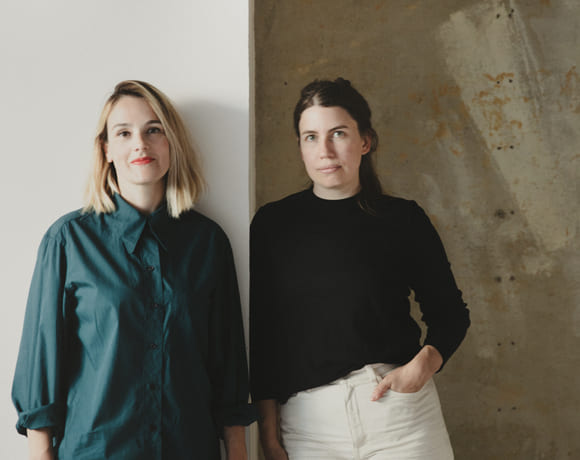
Augure Studio
Revealing, Simplifying, Adapting
Cent15 Architecture
A Process of Learning and Reinvention
Pierre-Arnaud DescĂ´tes
Composing Spaces, Revealing Landscapes
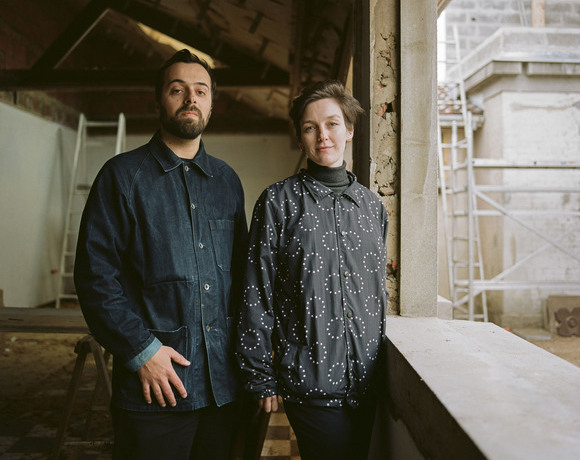
BUREAUPERRET
What Remains, What Becomes
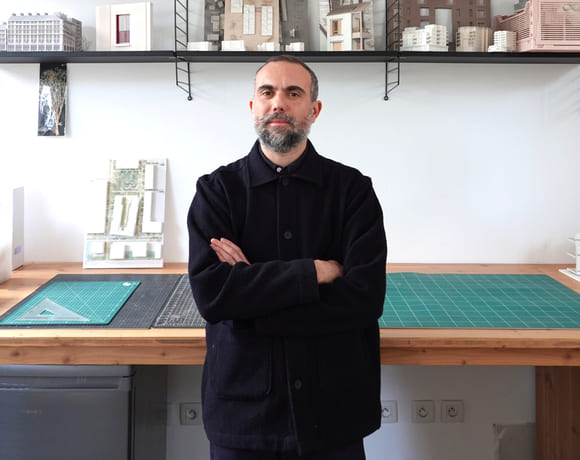
ECHELLE OFFICE
In Between Scales
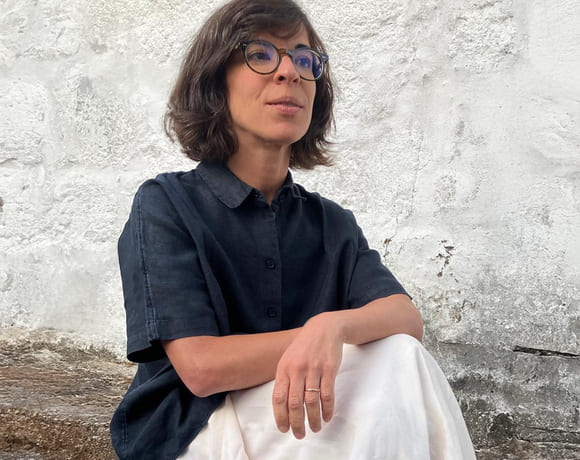
Atelier
Rooted in Context, Situated at the Centre
AJAM
Systemic Shifts, Local Gestures
Mallet Morales
Stories in Structure
Studio SAME
Charting Change with Ambition
Lafayette
Envisioning the City of Tomorrow
Belval & Parquet Architectes
Living and Building Differently
127af
Redefining the Common
HEROS Architecture
From Stone to Structure
Carriere Didier Gazeau
Lessons from Heritage
a-platz
Bridging Cultures, Shaping Ideas
Rodaa
Practicing Across Contexts
Urbastudio
Interconnecting Scales, Communities, and Values
Oglo
Designing for Care
Figura
Figures of Transformation
COVE Architectes
Awakening Dormant Spaces
Graal
Understanding Economic Dynamics at the Core
ZW/A
United Voices, Stronger Impacts
A6A
Building a Reference Practice for All
BERENICE CURT ARCHITECTURE
Crossing Design Boundaries
studio mäc
Bridging Theory and Practice
studio mäc
Bridging Theory and Practice
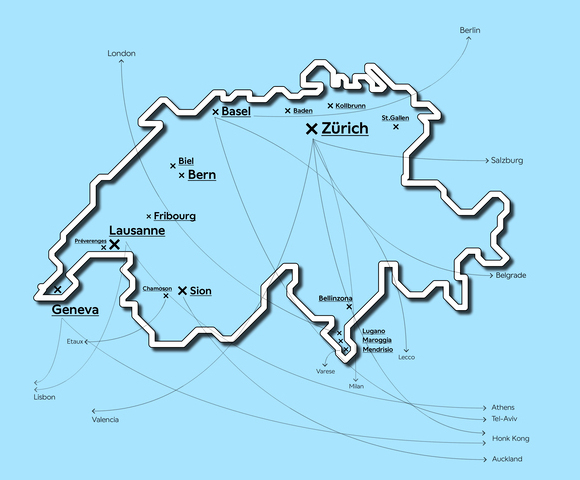
New Swiss Architecture
An Original Idea by New Generations
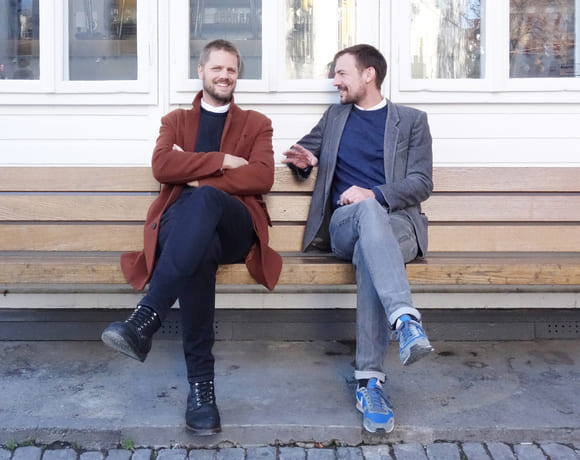
KUMMER/SCHIESS
Compete, Explore, Experiment
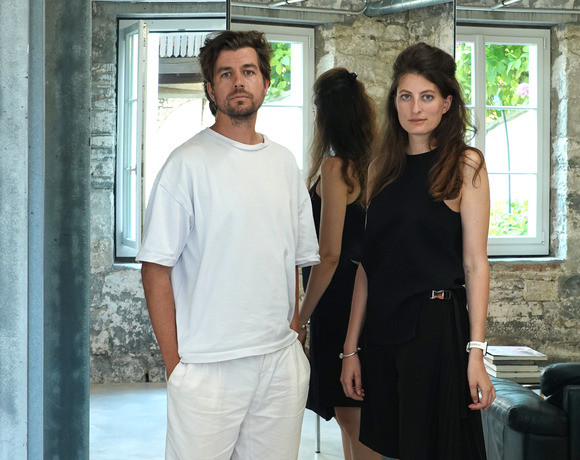
ALIAS
Stories Beyond the Surface
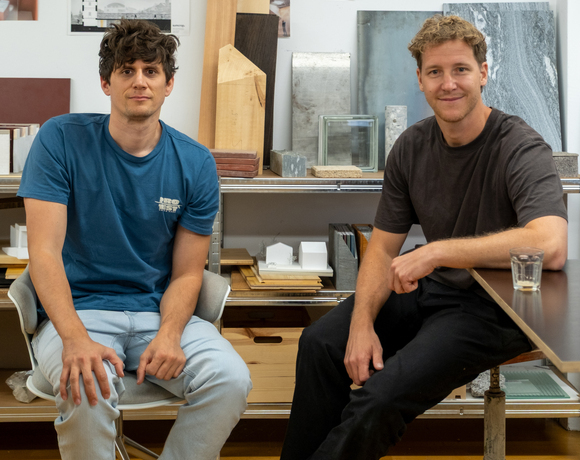
sumcrap.
Connected to Place
BUREAU/D
From Observation to Action
STUDIO ROMANO TIEDJE
Lessons in Transformation
Ruumfabrigg Architekten
From Countryside to Lasting Heritage
Kollektiv Marudo
Negotiating Built Realities
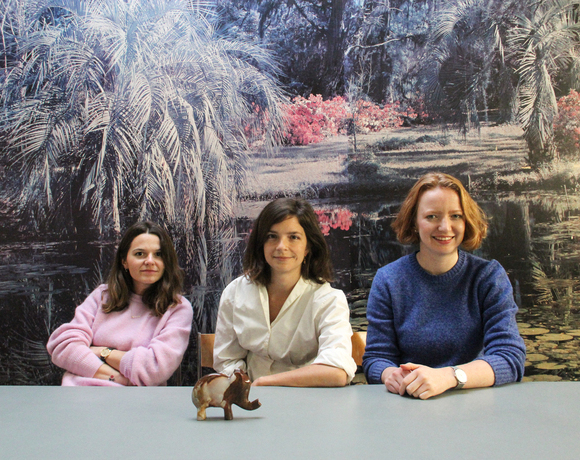
Studio Barrus
Starting byChance,Growing Through Principles
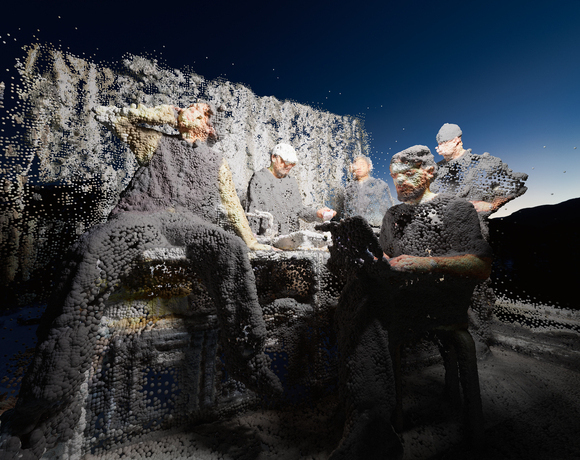
dorsa + 820
Between Fiction and Reality
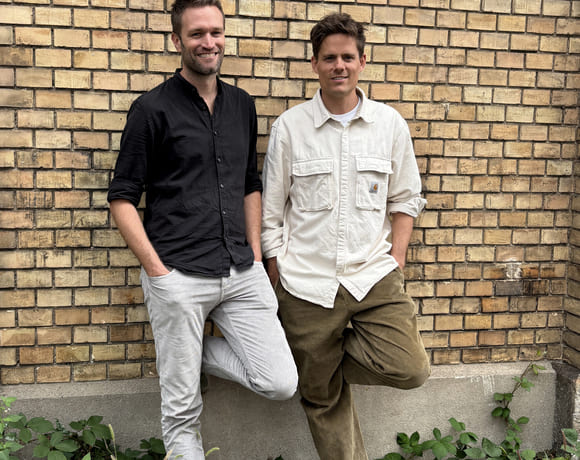
S2L Landschaftsarchitektur
Public Spaces That Transform
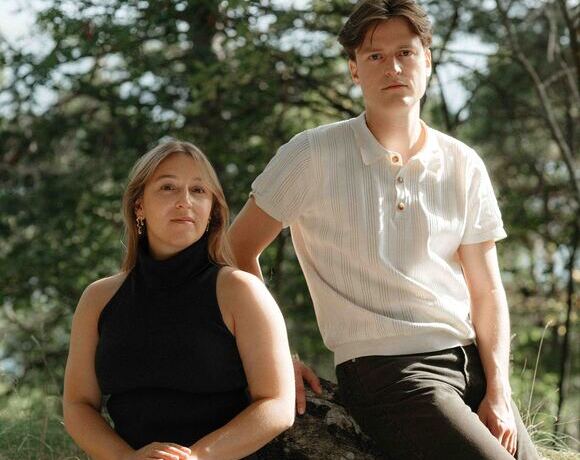
DER
Designing Within Local Realities
Marginalia
Change from the Margins
En-Dehors
Shaping a Living and Flexible Ecosystem
lablab
A Lab for Growing Ideas
Soares Jaquier
Daring to Experiment
Sara Gelibter Architecte
Journey to Belonging
TEN (X)
A New Kind of Design Institute
DF_DC
Synergy in Practice: Evolving Together
GRILLO VASIU
Exploring Living, Embracing Cultures
Studio â Alberto Figuccio
From Competitions to Realised Visions
Mentha Walther Architekten
Carefully Constructed
Stefan Wuelser +
Optimistic Rationalism: Design Beyond the Expected
BUREAU
A Practice Built on Questions
camponovo baumgartner
Flexible Frameworks, Unique Results
MAR ATELIER
Exploring the Fringes of Architecture
bach muĚhle fuchs
Constantly Aiming To Improve the Environment
NOSU Architekten GmbH
Building an Office from Competitions
BALISSAT KAĂANI
Challenging Typologies, Embracing Realities
Piertzovanis Toews
Crafted by Conception, Tailored to Measure
BothAnd
Fostering Collaboration and Openness
Atelier ORA
Building with Passion and Purpose
Atelier Hobiger Feichtner
Building with Sustainability in Mind
CAMPOPIANO.architetti
Architecture That Stays True to Itself
STUDIO PEZ
The Power of Evolving Ideas
Architecture Land Initiative
Architecture Across Scales
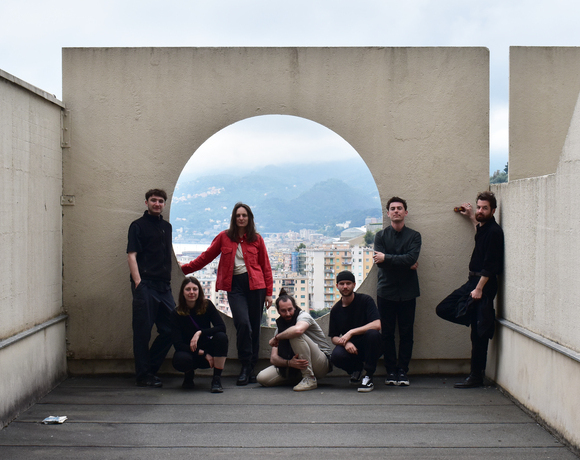
ellipsearchitecture
Humble Leanings, Cyclical Processes
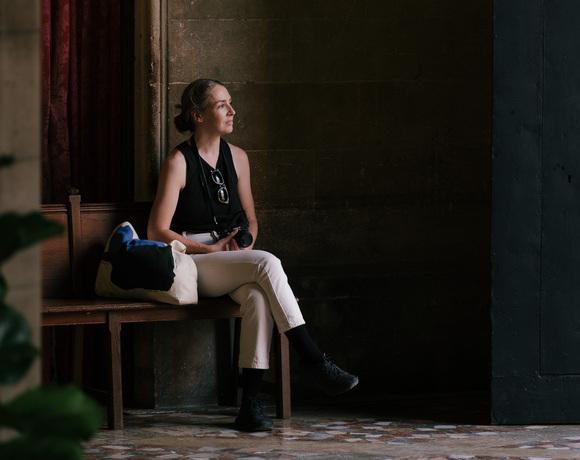
Sophie Hamer Architect
Balancing History and Innovation
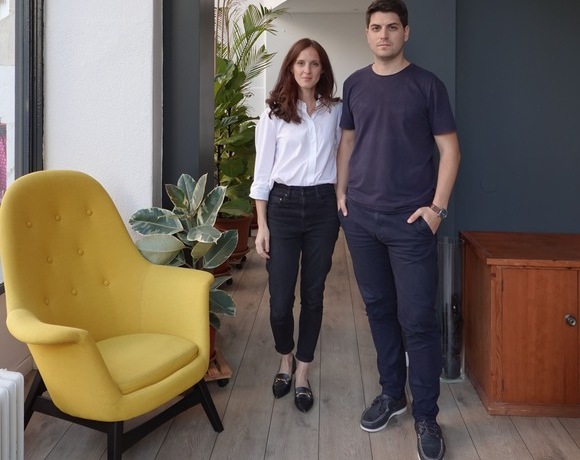
ArgemĂ Bufano Architectes
Competitions as a Catalyst for Innovation
continentale
A Polychrome Revival
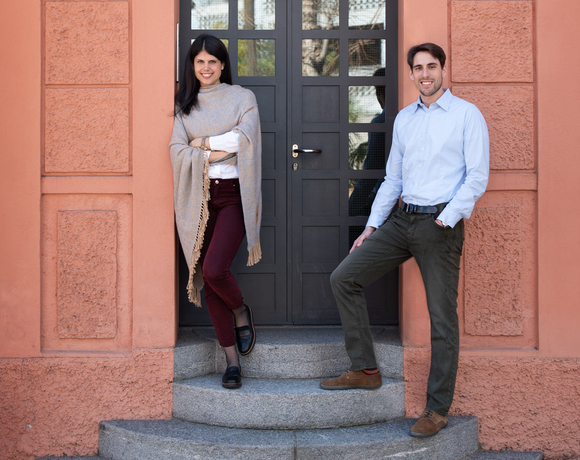
valsangiacomoboschetti
Building With What Remains
Oliver Christen Architekten
Framework for an Evolving Practice
MMXVI
Synergy in Practice
Balancing Roles and Ideas
studio 812
A Reflective Approach to
Fast-Growing Opportunities
STUDIO4
The Journey of STUDIO4
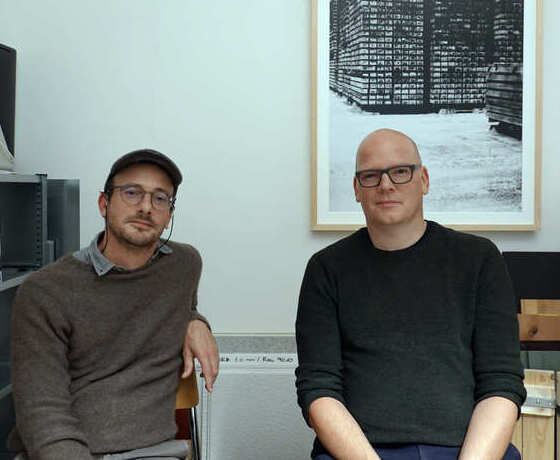
Holzhausen Zweifel Architekten
Shaping the Everyday
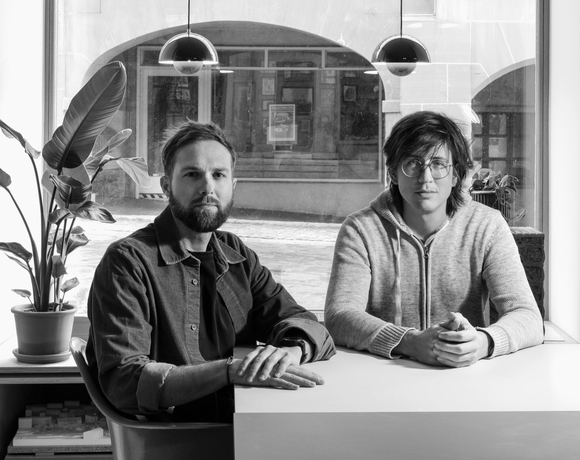
berset bruggisser
Architecture Rooted in Place
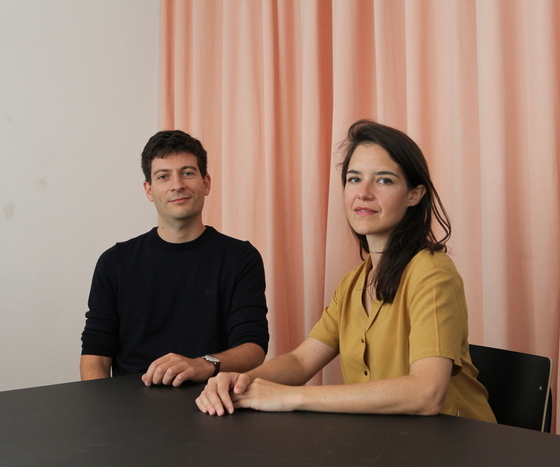
JBA - Joud Beaudoin Architectes
New Frontiers in Materiality
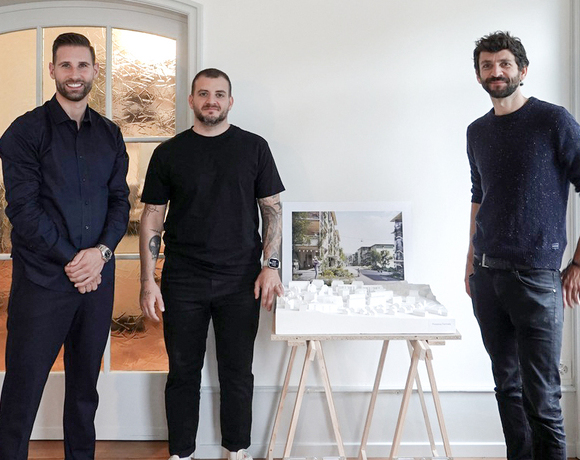
vizo Architekten
From Questions to Vision
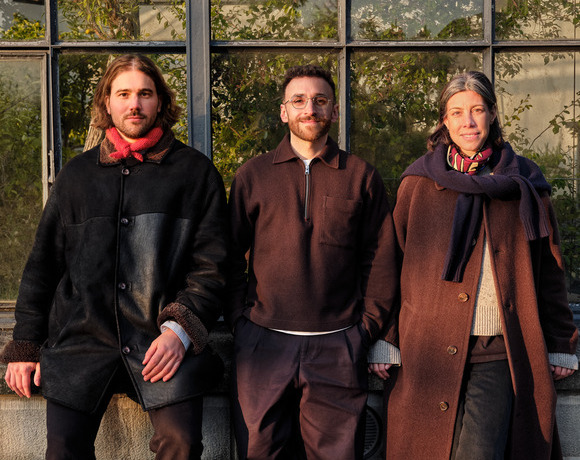
Atelier NU
Prototypes of Practice
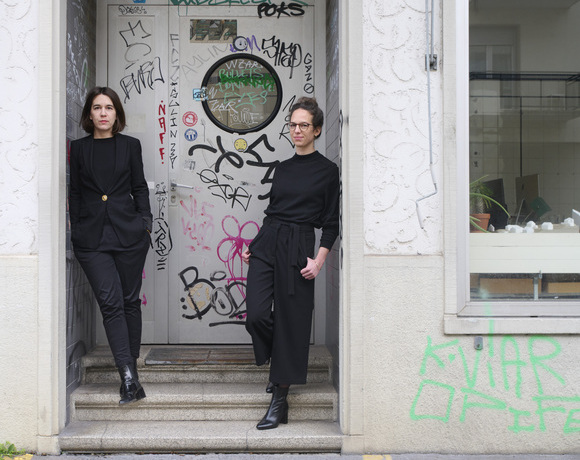
Atelier Tau
Architecture as a Form of Questioning
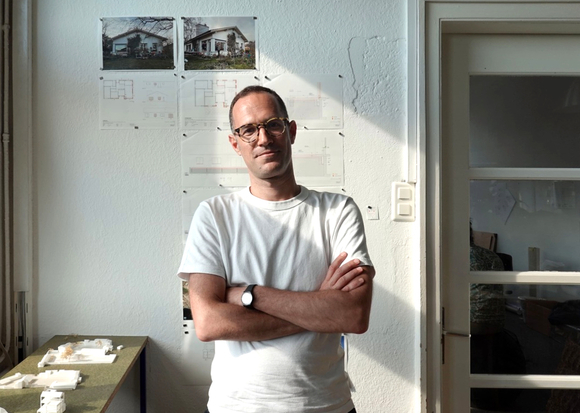
alexandro fotakis architecture
Embracing Context and Continuity
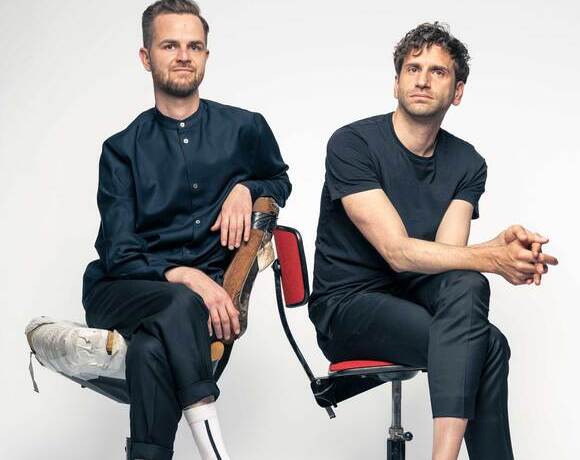
Atelier Anachron
Engaging with Complexity
SAJN - STUDIO FĂR ARCHITEKTUR
Transforming Rural Switzerland
guy barreto architects
Designing for Others, Answers Over Uniqueness
Concrete and the Woods
Building on Planet Earth
bureaumilieux
What is innovation?
apropaĚ
A Sustainable and Frugal Practice
Massimo Frasson Architetto
Finding Clarity in Complex Projects
Studio David Klemmer
Binary Operations
Caterina Viguera Studio
Immersing in New Forms of Architecture
r2a architectes
Local Insights, Fresh Perspectives
HertelTan
Timeless Perspectives in Architecture
That Belongs
Nicolas de Courten
A Pragmatic Vision for Change
Atelier OLOS
Balance Between Nature and Built Environment
Associati
âCheap but intenseâ: The Associati Way
emixi architectes
Reconnecting Architecture with Craft
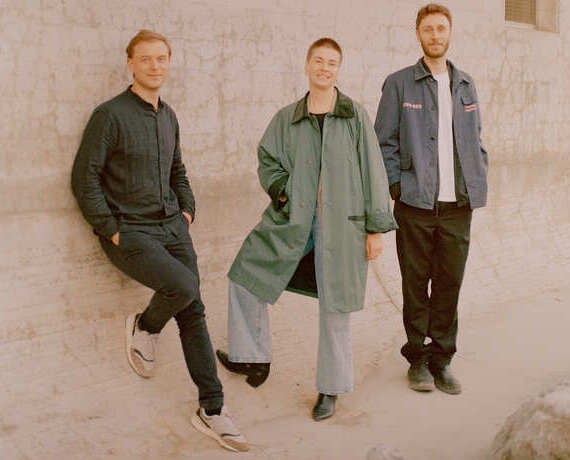
baraki architects&engineers
From Leftovers to Opportunities
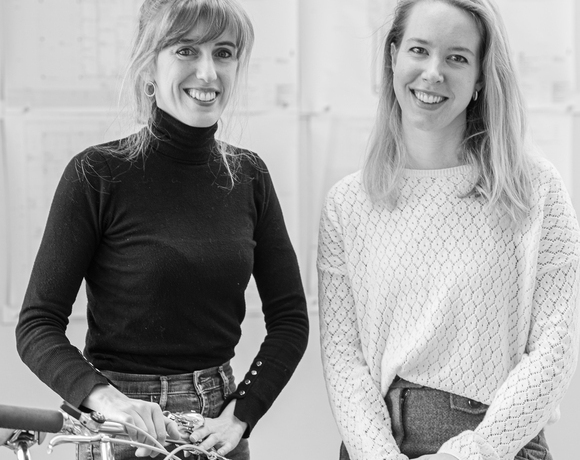
DARE Architects
Material Matters: from Earth to Innovation
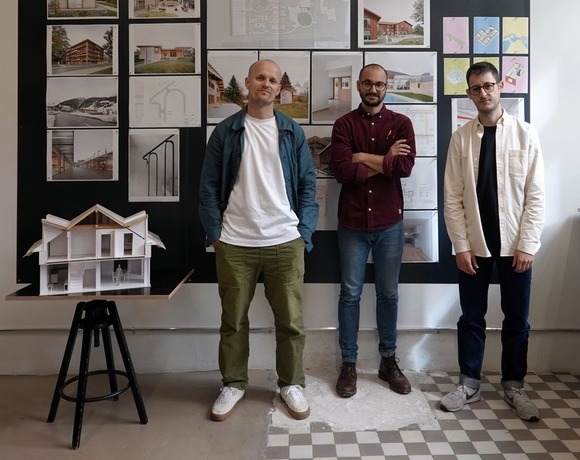
KOMPIS ARCHITECTES
Building from the Ground Up
Fill this form to have the opportunity to join the New Generations platform: submissions will be reviewed on a daily-basis, and the most innovative practices will have the chance to be part of the media's coverage and participate in our cultural agenda, including events, research projects, workshops, exhibitions and publications.
New Generations is a European platform that investigates the changes in the architectural profession ever since the economic crisis of 2008. We analyse the most innovative emerging practices at the European level, providing a new space for the exchange of knowledge and confrontation, theory, and production.
Since 2013, we have involved more than 3.000 practices from more than 50 countries in our cultural agenda, such as festivals, exhibitions, open calls, video-interviews, workshops, and experimental formats. We aim to offer a unique space where emerging architects could meet, exchange ideas, get inspired, and collaborate.
An original idea of New Generations
Team & collaborators: Gianpiero Venturini, Marta HervĂĄs Oroza, Elisa Montani, Giuliana Capitelli, Kimberly Kruge, Canyang Cheng
If you have any questions, need further information, if you'd like to share with us a job offer, or just want to say hello please, don't hesitate to contact us by filling up this form. If you are interested in becoming part of the New Generations network, please fill in the specific survey at the 'join the platform' section.
Rooted in Contextual Understanding
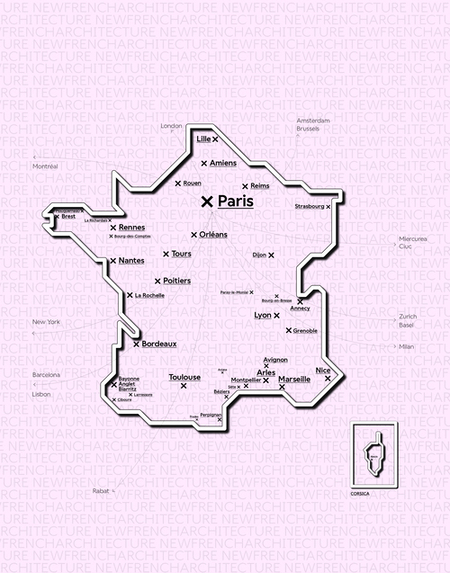
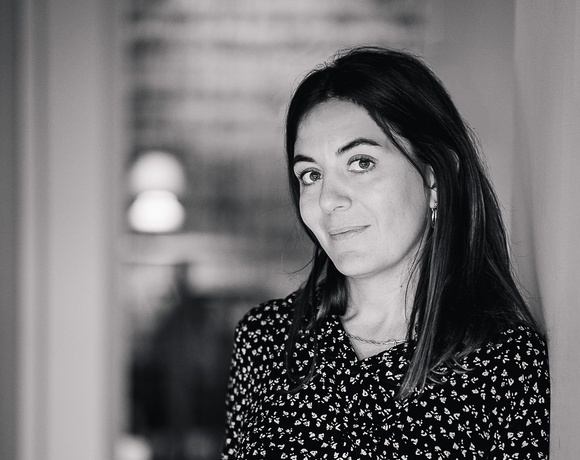
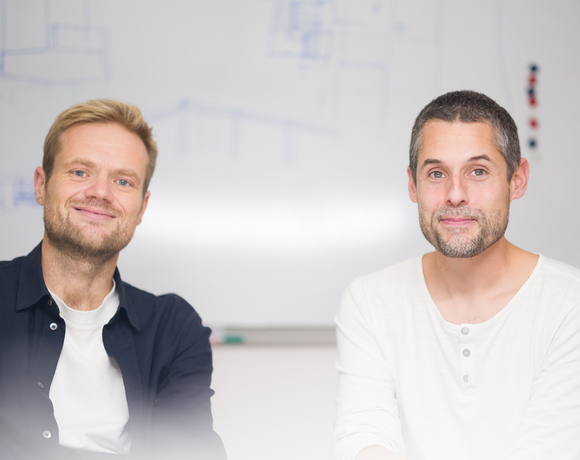
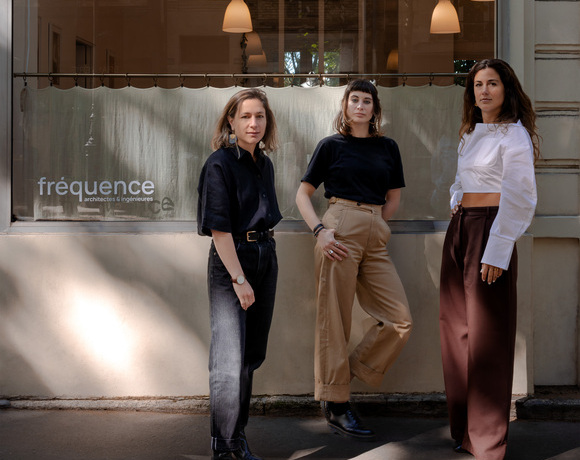
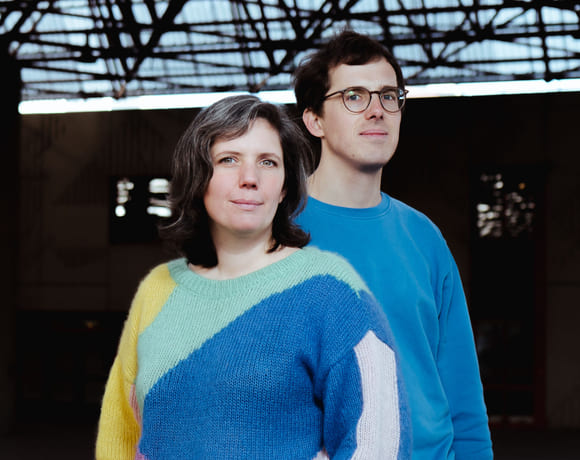
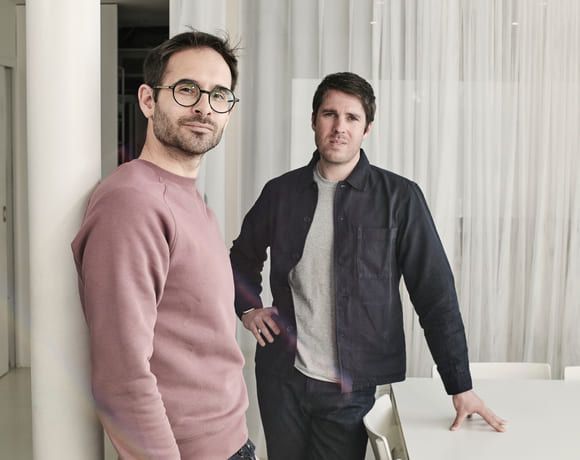
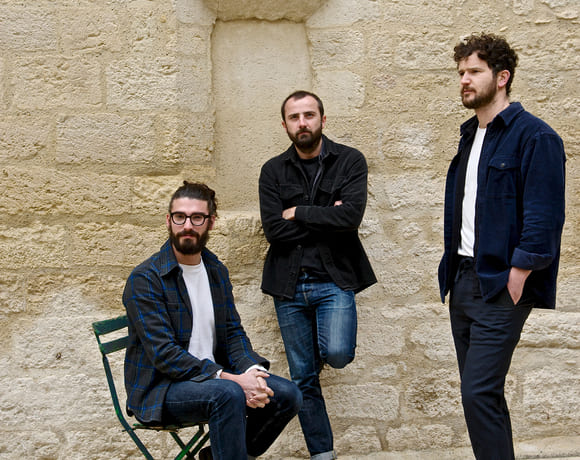
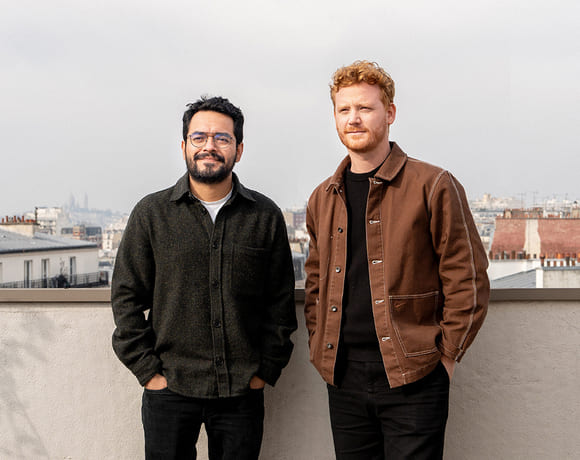
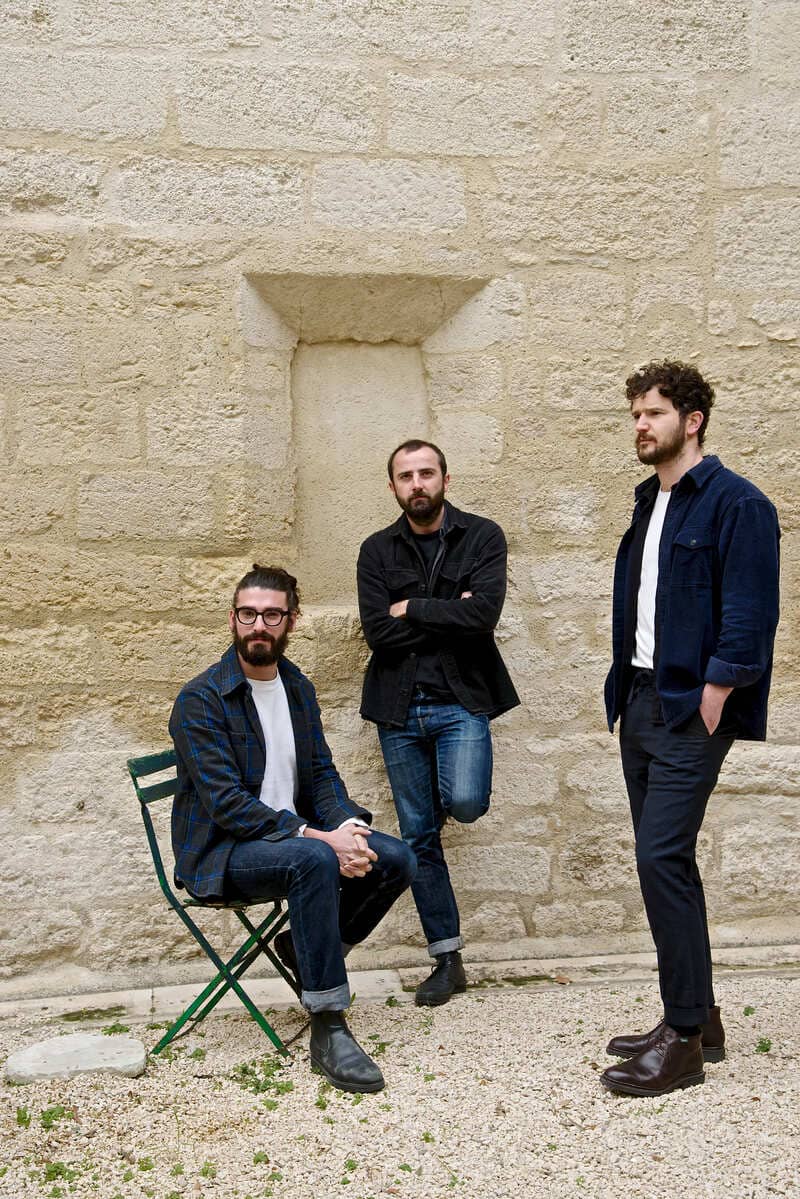
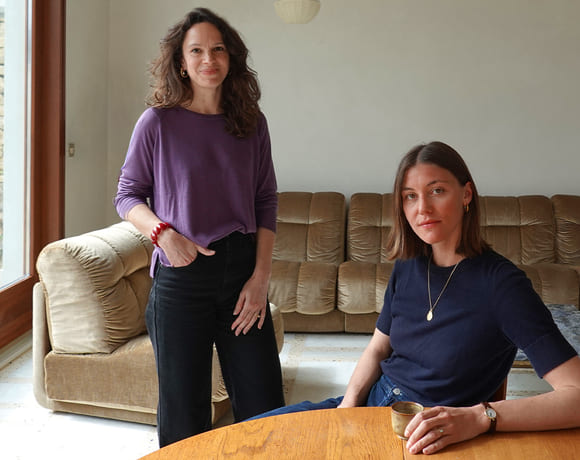
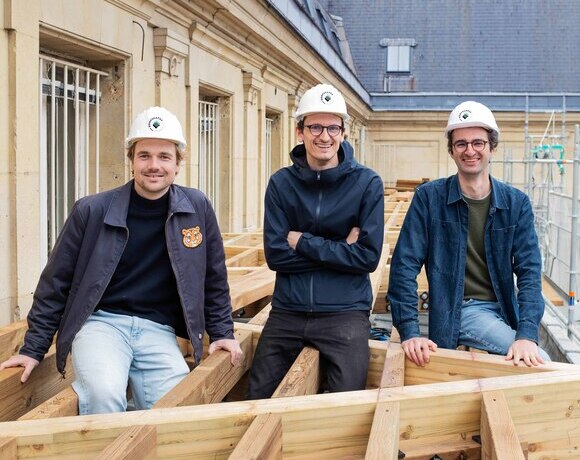
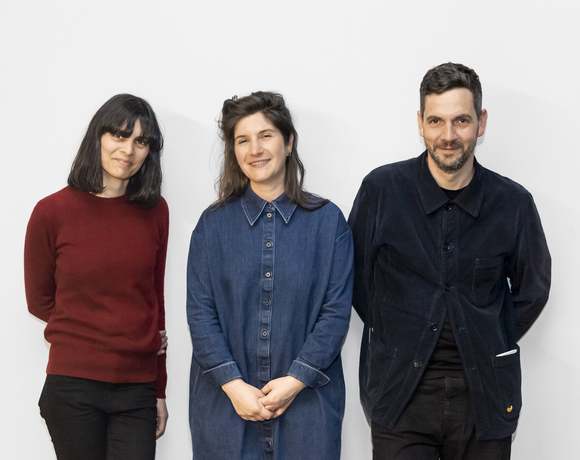
Founded in 2021 and based in Paris and Brittany, parages is an architecture firm led by three partners: Bertrand Ătienne Le Personnic, Yannis Fremont Marinopoulos, and Hugo Maffre. The practice is a proud laureate of the 2023 Europe 40 Under 40 award, distinguishing the continent's most promising young architects and designers.
From the very beginning, parages has built a versatile practice, tackling a wide variety of scales and programs. Their portfolio ranges from multi-family housing and public cultural and sports facilities to design and individual homes.
The studio is also deeply committed to a comprehensive low-carbon approach. This commitment translates into innovative construction methods suited to the local context and the extensive use of bio-based materialsâincluding timber frames with straw insulation, and load-bearing solid stone with hemp insulation.
YM: Yannis Fremont Marinopoulos | BP: Bertrand Ătienne Le Personnic | HM: Hugo Maffre
Dual roots, strong start
YM: Launching a practice today requires flexibility and adaptation. While Paris hosts many architecture firms, from the outset this practice chose to operate in two regions of Franceâboth western (Bretagne) and Paris and its surroundings. This dual presence has been key to establishing the firm in 2021 and maintaining resilience amid shifting political agendas and private-sector challenges. Starting a practice often means embracing small, unconventional projects. That was true for us with Dienville (RĂŠgion Champagne), our first public tenderâa project born from a residency. We spent five days there, living on site, connecting with the mayor, neighbours, local officials, and the CAUE Conseil dâArchitecture, dâUrbanisme et de lâEnvironnement. It ended up being more of a programming mission though we ended up doing a proper project afterwards. This project was fundamental for our office, serving as a crucial starting point. Although it wasn't highly profitable, it successfully opened doors to public tenders and the public sector.
HM: For this residency, the applicants were all very young practices, like us, with one or two years of starting their own practice. It was really about thinking in terms of programming without the assurance that the project would ever come out. Itâs a small town, and both the national political instability and the administrative complexity in France make it difficult for the local authorities to get it organised and built in the end. Still, during the residency, we made a proper project, with images, plans, and held an exhibition on site. We invited the mayor, the neighbors, the CAUE, and everyone involved. That temporary project became a reference for us that we used in order to apply for other small rehabilitations and extensions, like the one we created in Combrit Sainte Marine (Finistère). Thatâs also when our dual implantationâin Paris and Brittanyâbecame relevant.
We aimed to work across diverse environments and territories, engaging with various client types and project scopes, including public realm, social housing, private housing, and individual residences. We wanted to work both in rural areas, which we call in French centre-bourg, meaning small villages, and urban areas.
BP: The Sociocultural Centre of Danville and the Public Library of Combat Sainte Marine were our first step into public competitionsâour first public facility contracts. Before that, we worked for a large Parisian office, with about 50 architects. Between the three of us, we spent four to eight years there, working as project leaders. Then COVID hit.
HM: Around that time, we completed a big project weâd been working on, were nearly 30, and wanted to do a project for our own office. We started entering competitions together, like Europan, to see how we worked as a team and test our potential for collaboration. One of our first proposals was located in Charleroi, Belgium, for EUROPAN. Though we received the jury's special mention, the project never went through. After that, we decided to start our own practice. It was quite a challenge since we didnât leave our respective jobs with ongoing projects. We started with a few small flat renovations in Parisâ60 to 80 square metresâwhich werenât enough to sustain the three of us financially, but kept us working as a practice. Very quickly, we decided to rent an office space. It felt necessary to us to physically gather, brainstorm, and bring our projects together. Even though we now have larger projects, we manage to keep a variety of scales and scopes in our projects. This diversity, especially our smaller projects, allows us to experiment and evolve our architectural concepts.
Collaborative growth
BP: I was born in Saint Brieuc (Bretagne). I spent much of my life there, and my family still lives in the area. My girlfriend and I built a house in the area, and I already had a local network, so it became evident to me that I would work there too. Following the Socio-Cultural Centre of Dienville project, we have decided to expand our focus on public realm projects in Brittany.
HM: With Bertrand in Brittany, we had the chance to open up our geographic scope. We started meeting peopleâpoliticians, the CAUE (Conseil d'Architecture, d'Urbanisme et de l'Environnement), and others involved in regional projects. That allowed us to apply to small local projects. It wasnât the main goal, but it became a strategic part of the office. Brittany also offered a very different landscape from Paris, architecturally and materially. The kinds of projects we do there are different. We are deeply focused on materiality, structure, and local resources. For example, in renovating Bertrandâs houseâour first completed projectâwe used hemp, slats, and a timber frame. This was an early exploration of innovation, bringing natural, local materials into a new project set in a rural area.
BP: Our presence in Brittany allowed us to participate in larger projects as local partners to Parisian firms. This led to our collaboration with HEMAA Architects. Together, we worked on local projects as well as larger public tenders.
YM: Our first competition in collaboration with them was for a Sport Complex in Dinan (Cotes dâArmor), near Saint-Brieuc, in collaboration with HEMAA. Although we were named co-winners, we were ultimately not selected. This first collaboration made us want to develop more projects together. It helped us build a strong partnership with HEMAA and led to quite a few competitions: The Museum of Megalithic Stones of Carnac, the Tribune de Quimper (that we won), a public office in Loudeac, and, more recently, a Cultural Centre in Brest, a Public School in Paimpol, and the New Stadium of Laval. After winning Tribune Quimper, we were invited to another Tribune competition on our own. Itâs a kind of ping-pong: the Brittany office supports the Paris office, and vice versa, always working closely together.
To build a strong portfolio, partnering with more experienced firms has become essential. We often collaborateâmostly as the smaller partner alongside larger offices from Paris (HEMAA, Avenier Corneja, PALAST, etc.) or Nantes (recently, with RAUM). But with growing experience, weâre now increasingly taking the lead in these partnerships. We have recently been shortlisted in a competition in the region of Touraine. A smaller local practice reached out (Mesnil Architecture) âthey knew the mayor but lacked the referencesâso we partnered. These collaborations help us stay connected to different territories and project types. It keeps things diverse and interestingâfor us and our collaborators. And itâs become a strong part of our officeâs strategy.
Material explorations
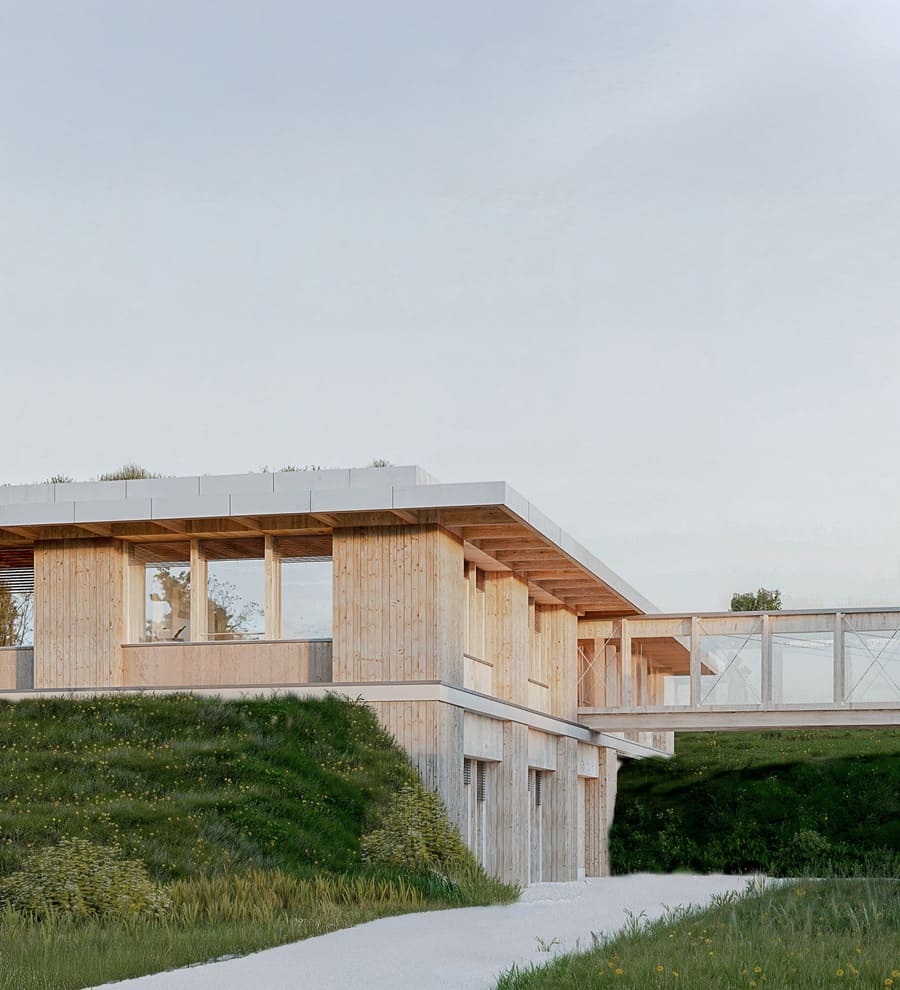
YM: Whenever possible, we prioritise bio-sourced and local materials, always pushing ourselves to think differently with each projectâs material choices. The importance we give to constructive implementations goes alongside a great value on plan, space, and constructive legibilityâcreating buildings that are meaningful in plan, structure, and space, making each project clear and readable. Take our Tribune project, for example: a large wooden roof supported by two pillars resting on a substantial concrete base. That clarity is a key thread connecting our workâa space that can be easily understood and experienced. Also, our project of Public Office Extension in Montreuil-le-Gast demonstrates our ambition. We duplicated the square shape of the existing building, adding a large patio inside, giving the users a protected outdoor area, and a large common space opening towards the surroundings.
BP: Sometimes the material is tied to the local context, so it varies from site to site. In the library of Combrit Sainte Marine, we reused stones from the existing building to make the extension. For the Megalithic History Museum of Carnac, we used stones from the existing wall on site in the new building, combined with new engineered materials, in order to reduce the carbon footprint of the project. We try to use something thatâs not just local, but that also links to the local context.
YM: Using these kinds of materials might be more expensive, but thatâs not the main issue. Often, the primary constraints come from the construction regulations. Whatâs key is getting everyone on boardâthe client, the engineers, the architect. Weâve realised that if even one team member isnât aligned, it might make it impossible to use hemp, rammed earth, or other so-called âinnovativeâ materials. The good thing in France is that politics support the use of these bio-sourced materials. So, when the architect is on board, and the clientsâlike the mayor or public or social housing developersâare also aligned, you can always find technical solutions.
Architecture in France is clearly moving in a sustainable direction. Itâs a path we want to follow, and one shared by our generation of architects. That helpsâwhen technical challenges arise, you can reach out to friends working the same way and ask for their support.
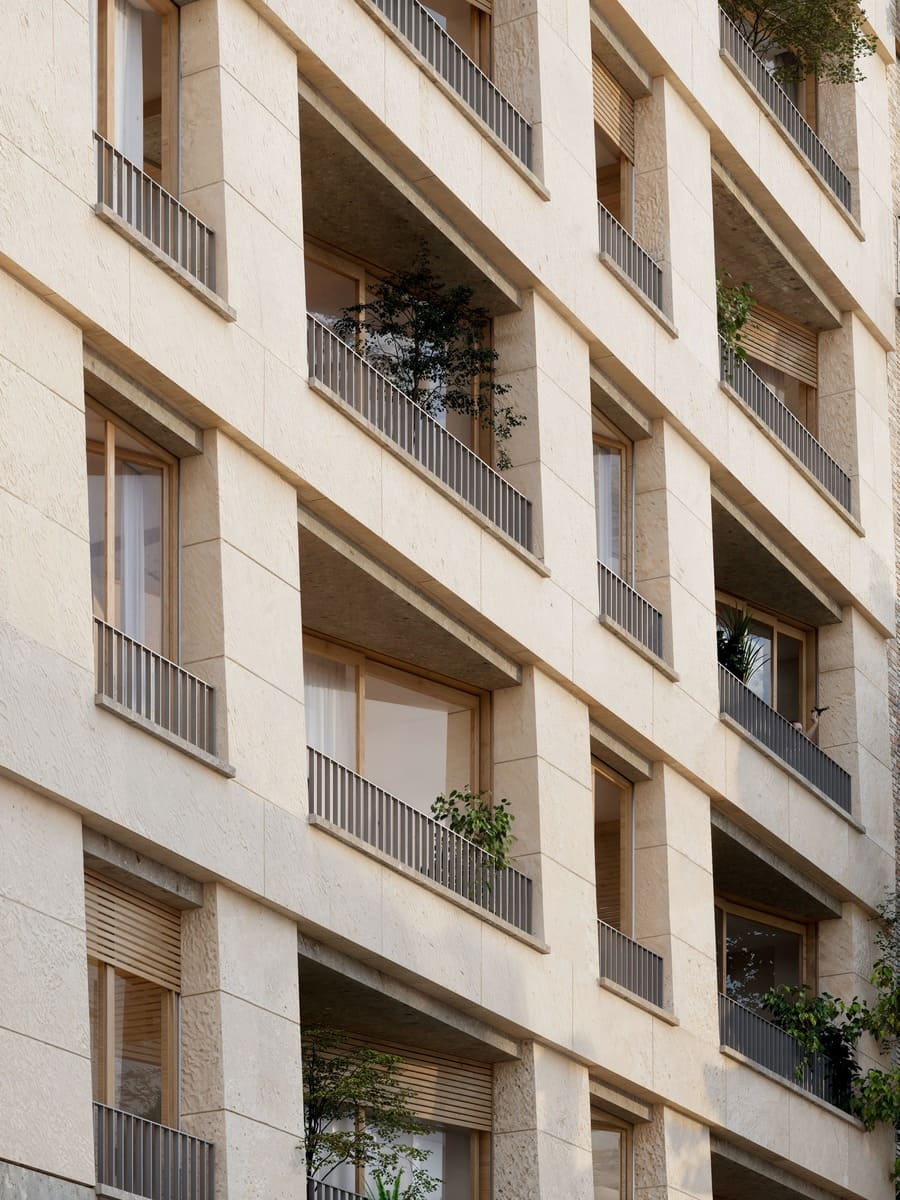
HM: Weâre also not afraid to experiment. Itâs time to push limits and explore so-called materials, which often arenât so new after all. For example, we are developing constructive stone facades in two projects: a 24-unit social housing building in Laval (Mayenne) and a 21-unit social housing building in Issy-les-Moulineaux (Hauts de Seine). Both of these projects have massive stone façades, wood slabs (CLT), and timber frame walls. Though weâd never done a project with massive stone before, we managed to gather a team to accompany us in submitting the proposalâengineers who had either done similar buildings before or who were excited to do them. Our proposal included a structural façadeâ30 cm thick stone with bio-sourced insulation behind.
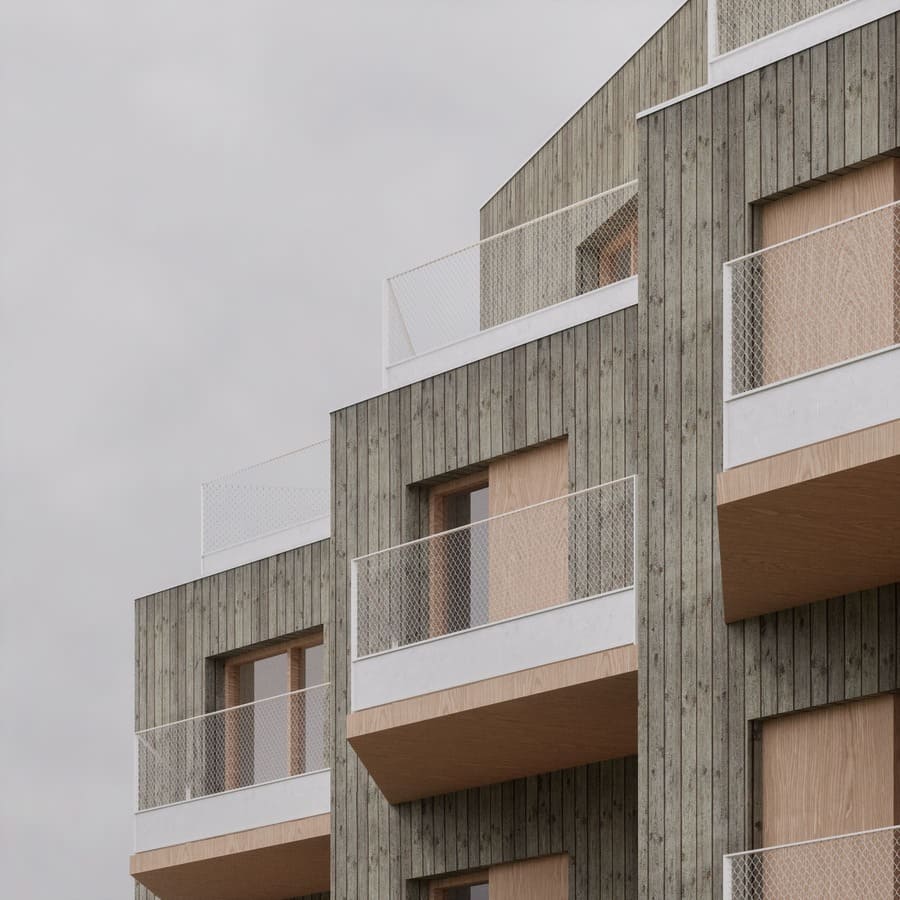
YM: For the roof extension of our project, Boulevard Diderot in Paris, for Paris Habitat (one of the biggest social housing developers), we worked with a very ambitious engineering team. The structure used re-employed steel beams, and the insulation was hay.
HM: The steel beams were re-employed, so the structure has a low carbon footprint. The design process was really interesting. The supplier who brings the beams canât say how many or what size heâll have in two years. What he can say is that he always has five-metre beams in stock. So, we designed the entire plan around a return of less than five metres. In housing, thatâs feasible. That way, we could tell the client that weâd be able to reuse the beams and build in two or three yearsâit didnât depend on what the supplier might have in the future. Reuse is becoming fashionableâitâs very interestingâbut the process is tough because you never know how much material will be available.
YM: These processes are still in their early stages. Thereâs a missing link between the client or public developer and the company executing the project. How do you secure the material? Where and how do you store it? At what cost? Few companies have clear answers. Itâs developing, but thereâs still a long way to go.
Beyond fixed programs
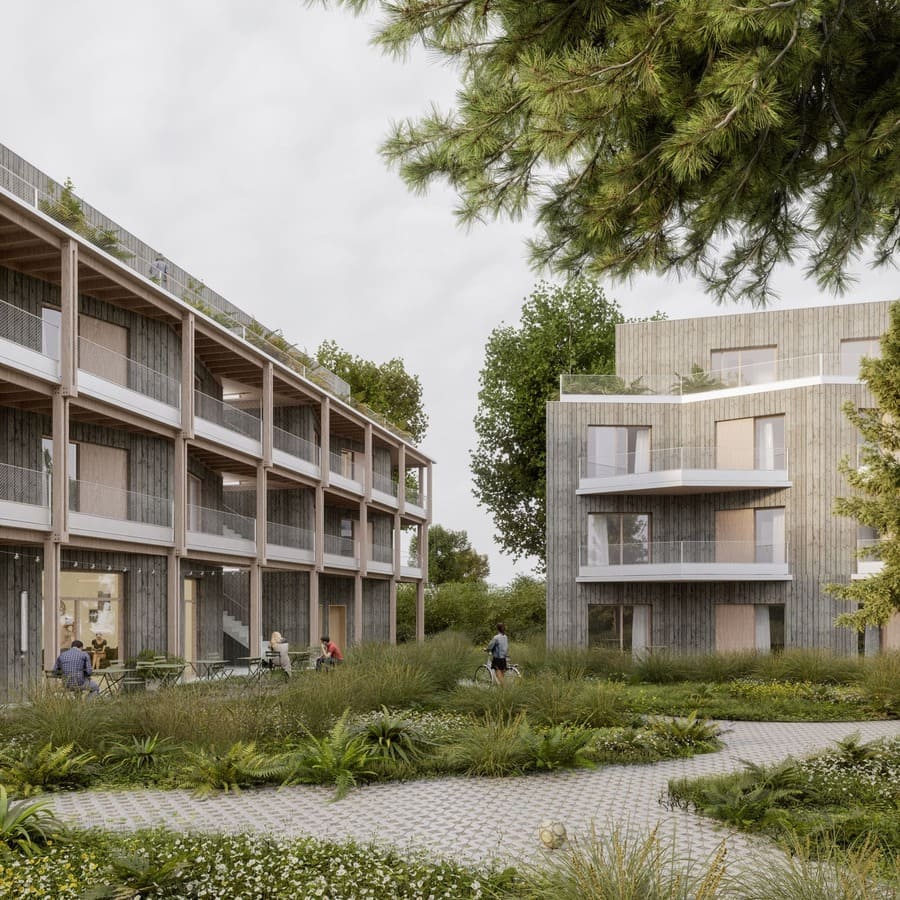
HM: Weâve talked about materiality, but thereâs also something really important in housingâand in cultural and other projects: uses. In our Brest projectâ24-by-1 housing in three buildings we won in 2024âwe really focused on modularity and how spaces can evolve over the next decade. We looked at the flexibility of space and enhancing shared spaces. For example, the corridor is more than just a dark space with stairs; it becomes a proper social vector that inhabitants can use.
BP: We needed to build a corridor, so why not make something more of that program piece? Itâs an enlarged shared spaceâ3.5 metres wideâwhere people can put a table and chairs and gather. In Yffiniac, we developed a similar idea with individual space, transforming the garages of the 26 social houses into a modular space that can become an atelier, a workshop, or an extension of the living room.
YM: The plot there is a long strip with 26 social housing units in a row. We wanted to integrate the garage into each house and play with the skyline in an otherwise uniform neighbourhood. The surrounding context is the same house repeated over and over. So, we introduced typological variationsâchanging roof slopes, for exampleâto give each house a distinct identity in a rational way. There are four house types arranged in sequence to create a dynamic silhouette.
BP: Without extending the budget, we proposed something more, initially not needed in the programâsomething cheaper that brings new value to the project. We could use the savings from the garage to improve the façade, the window quality, and the materiality. The space can change over the life of the program.
Supporting the existing
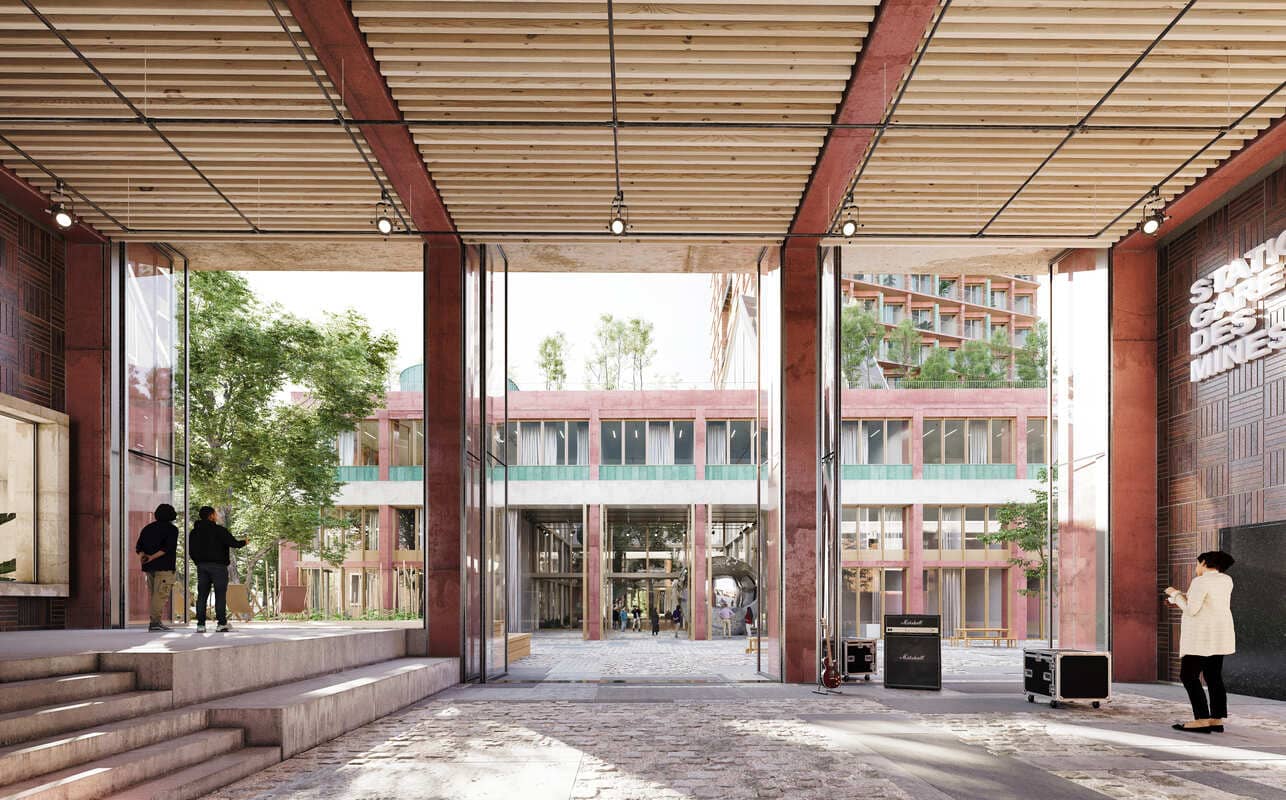
YM: Our projects are split almost 50/50 between renovation/extension and newly built projects. Even though the densities are not the same in urban and rural areas, we aim at developing more renovations and extensions in order to reduce the carbon footprint and keep the architectural heritage of the territories we build in. In Paris, there are often vertical extensions because of how dense the city is and how little free land there is. We are developing two roof elevation projects. One started in 2024 and is located in the 12th arrondissement overlooking the Petite Ceinture, a former railway now overgrown with trees. For this project, we are working with a private real estate developer specialising in buying the right to build on top of a building while rehabbing the existing structure. We added three stories and a small unit on the side. This project is very small but faces a lot of constraints. This ambition of rethinking the existing buildings is also present in the public projects we design. It is true for the library of Combrit Sainte Marine, the Public Offices extension of Montreuil le Gast, and also the Cultural Centre of la Gare des Mines in Paris. This project accompanies a student housing tower and industrial activities units designed by RAUM.
HM: Thatâs interesting because it ties back to what we said earlier about façades and form. Weâre into a kind of âsilentâ architectureânot super shaped, not colourful. Itâs more about the radical nature of the materials and the beauty of space and plans. The buildings we design, newly built or renovations and extensions, are the expression of a structure supporting the roof and creating generous spaces that can evolve.
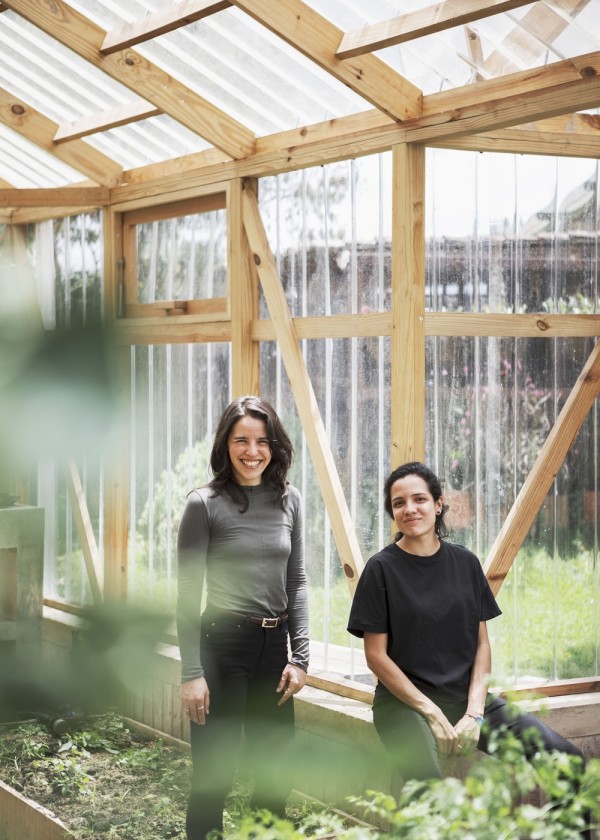
âĄď¸ Parages. Ph. Sophie Saâda
âĄď¸ Gare des Mines. Img. RAUM
âĄď¸ Issy Les Moulineaux. Img. Bureau 504
âĄď¸ Montreuil Le Gast. Img. Bureau 504
âĄď¸ Bois Guillaume Lots D & E. Img. Bureau 504