AJAM
Systemic Shifts, Local Gestures
New French Architecture
An Original Idea by New Generations
Mallet Morales
Stories in Structure
Studio SAME
Charting Change with Ambition
Atelier
Coming Soon
Lafayette
Envisioning the City of Tomorrow
Belval & Parquet Architectes
Living and Building Differently
127af
Redefining the Common
HEROS Architecture
From Stone to Structure
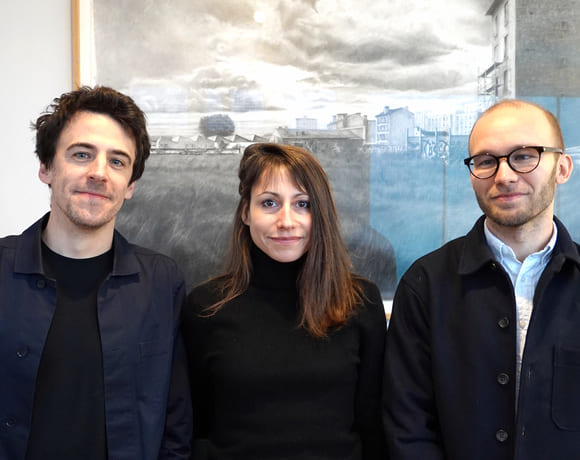
Carriere Didier Gazeau
Lessons from Heritage
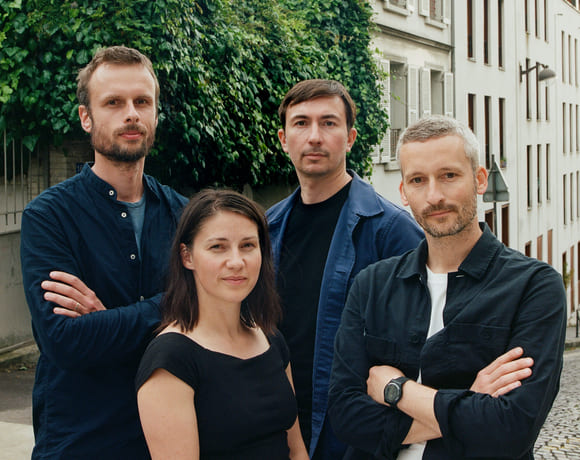
a-platz
Bridging Cultures, Shaping Ideas
Rodaa
Practicing Across Contexts
Urbastudio
Interconnecting Scales, Communities, and Values
Oglo
Designing for Care
Figura
Figures of Transformation
COVE Architectes
Awakening Dormant Spaces
Graal
Understanding Economic Dynamics at the Core
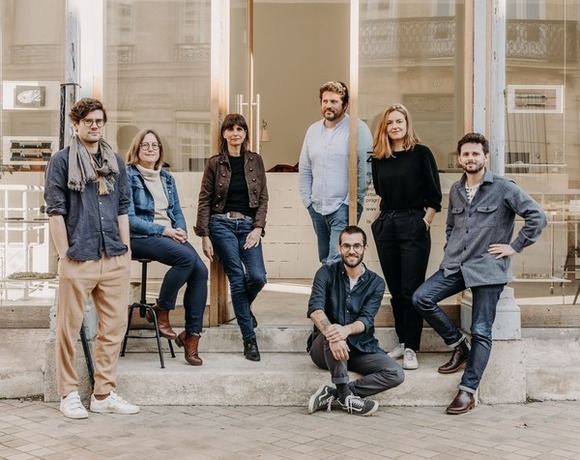
ZW/A
United Voices, Stronger Impacts
A6A
Building a Reference Practice for All
BERENICE CURT ARCHITECTURE
Crossing Design Boundaries
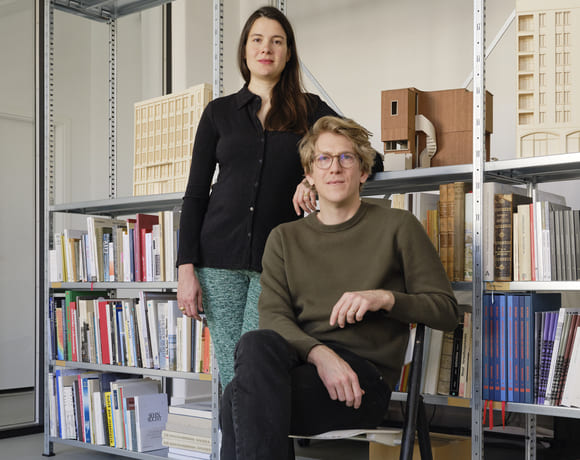
studio mÀc
Bridging Theory and Practice
studio mÀc
Bridging Theory and Practice
New Swiss Architecture
An Original Idea by New Generations
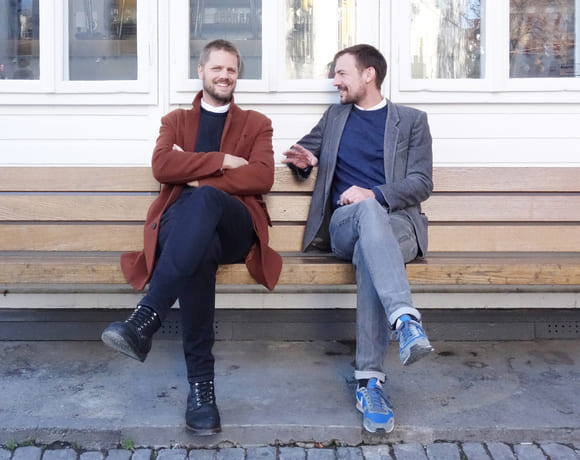
KUMMER/SCHIESS
Compete, Explore, Experiment
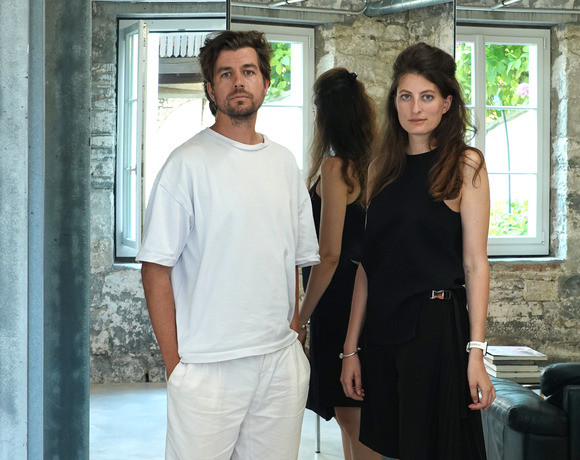
ALIAS
Stories Beyond the Surface
sumcrap.
Connected to Place
BUREAU/D
From Observation to Action
STUDIO ROMANO TIEDJE
Lessons in Transformation
Ruumfabrigg Architekten
From Countryside to Lasting Heritage
Kollektiv Marudo
Negotiating Built Realities
Studio Barrus
Starting byChance,Growing Through Principles
dorsa + 820
Between Fiction and Reality
S2L Landschaftsarchitektur
Public Spaces That Transform
DER
Designing Within Local Realities
Marginalia
Change from the Margins
En-Dehors
Shaping a Living and Flexible Ecosystem
lablab
A Lab for Growing Ideas
Soares Jaquier
Daring to Experiment
Sara Gelibter Architecte
Journey to Belonging
TEN (X)
A New Kind of Design Institute
DF_DC
Synergy in Practice: Evolving Together
GRILLO VASIU
Exploring Living, Embracing Cultures
Studio â Alberto Figuccio
From Competitions to Realised Visions
Mentha Walther Architekten
Carefully Constructed
Stefan Wuelser +
Optimistic Rationalism: Design Beyond the Expected
BUREAU
A Practice Built on Questions
camponovo baumgartner
Flexible Frameworks, Unique Results
MAR ATELIER
Exploring the Fringes of Architecture
bach muÌhle fuchs
Constantly Aiming To Improve the Environment
NOSU Architekten GmbH
Building an Office from Competitions
BALISSAT KAĂANI
Challenging Typologies, Embracing Realities
Piertzovanis Toews
Crafted by Conception, Tailored to Measure
BothAnd
Fostering Collaboration and Openness
Atelier ORA
Building with Passion and Purpose
Atelier Hobiger Feichtner
Building with Sustainability in Mind
CAMPOPIANO.architetti
Architecture That Stays True to Itself
STUDIO PEZ
The Power of Evolving Ideas
Architecture Land Initiative
Architecture Across Scales
ellipsearchitecture
Humble Leanings, Cyclical Processes
Sophie Hamer Architect
Balancing History and Innovation
ArgemĂ Bufano Architectes
Competitions as a Catalyst for Innovation
continentale
A Polychrome Revival
valsangiacomoboschetti
Building With What Remains
Oliver Christen Architekten
Framework for an Evolving Practice
MMXVI
Synergy in Practice
Balancing Roles and Ideas
studio 812
A Reflective Approach to
Fast-Growing Opportunities
STUDIO4
The Journey of STUDIO4
Holzhausen Zweifel Architekten
Shaping the Everyday
berset bruggisser
Architecture Rooted in Place
JBA - Joud Beaudoin Architectes
New Frontiers in Materiality
vizo Architekten
From Questions to Vision
Atelier NU
Prototypes of Practice
Atelier Tau
Architecture as a Form of Questioning
alexandro fotakis architecture
Embracing Context and Continuity
Atelier Anachron
Engaging with Complexity
studio jo.na
Transforming Rural Switzerland
guy barreto architects
Designing for Others, Answers Over Uniqueness
Concrete and the Woods
Building on Planet Earth
bureaumilieux
What is innovation?
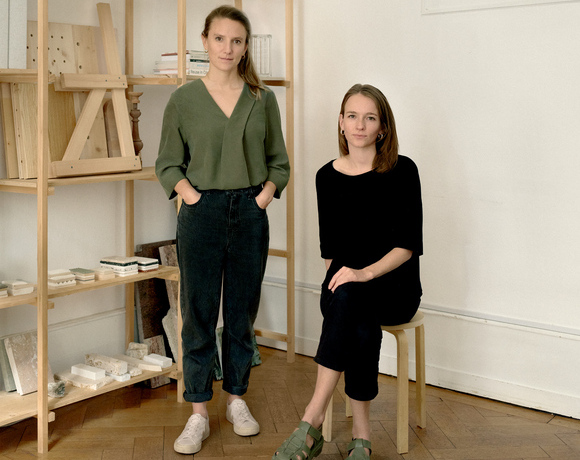
apropaÌ
A Sustainable and Frugal Practice
Massimo Frasson Architetto
Finding Clarity in Complex Projects
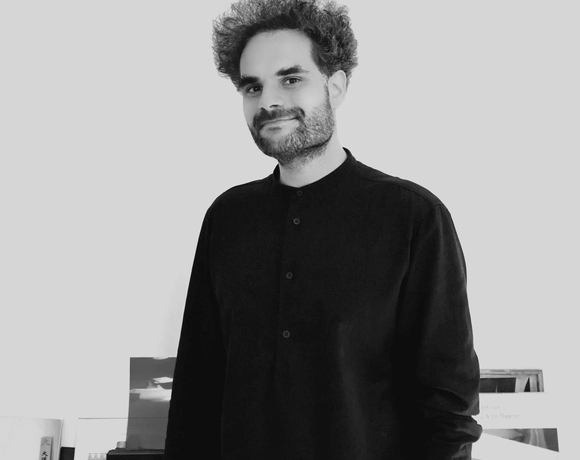
Studio David Klemmer
Binary Operations
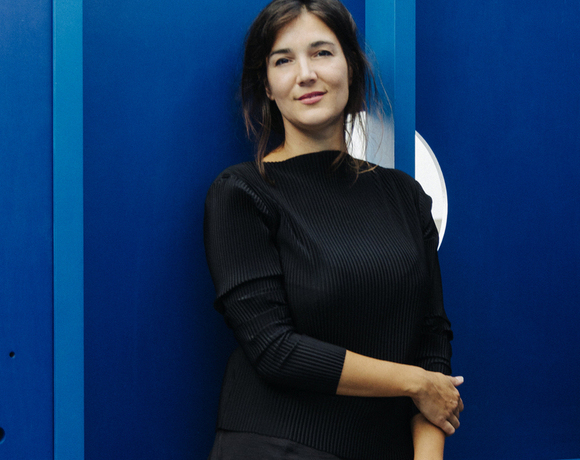
Caterina Viguera Studio
Immersing in New Forms of Architecture
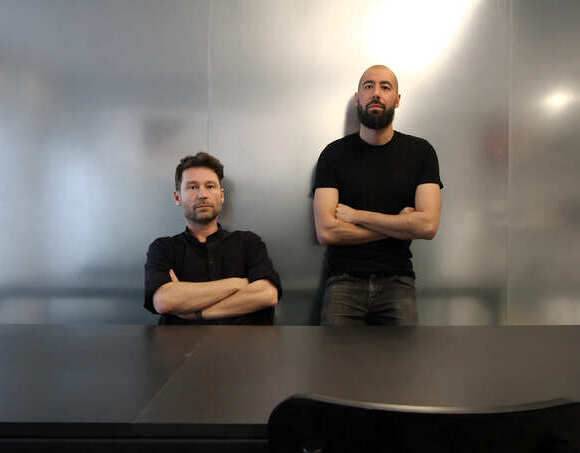
r2a architectes
Local Insights, Fresh Perspectives
HertelTan
Timeless Perspectives in Architecture
That Belongs
Nicolas de Courten
A Pragmatic Vision for Change
Atelier OLOS
Balance Between Nature and Built Environment
Associati
âCheap but intenseâ: The Associati Way
emixi architectes
Reconnecting Architecture with Craft
baraki architects&engineers
From Leftovers to Opportunities
DARE Architects
Material Matters: from Earth to Innovation
KOMPIS ARCHITECTES
Building from the Ground Up
Fill this form to have the opportunity to join the New Generations platform: submissions will be reviewed on a daily-basis, and the most innovative practices will have the chance to be part of the media's coverage and participate in our cultural agenda, including events, research projects, workshops, exhibitions and publications.
New Generations is a European platform that investigates the changes in the architectural profession ever since the economic crisis of 2008. We analyse the most innovative emerging practices at the European level, providing a new space for the exchange of knowledge and confrontation, theory, and production.
Since 2013, we have involved more than 3.000 practices from more than 50 countries in our cultural agenda, such as festivals, exhibitions, open calls, video-interviews, workshops, and experimental formats. We aim to offer a unique space where emerging architects could meet, exchange ideas, get inspired, and collaborate.
A project by Itinerant Office
Within the cultural agenda of New Generations
Editor in chief Gianpiero Venturini
Team Akshid Rajendran, Ilaria Donadel, Bianca Grilli
If you have any questions, need further information, if you'd like to share with us a job offer, or just want to say hello please, don't hesitate to contact us by filling up this form. If you are interested in becoming part of the New Generations network, please fill in the specific survey at the 'join the platform' section.
Systemic Shifts, Local Gestures
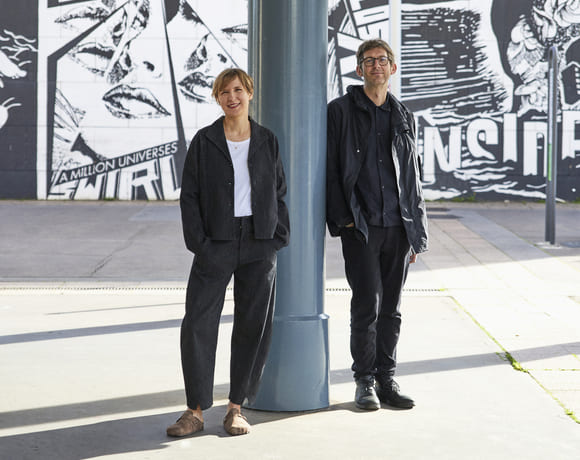
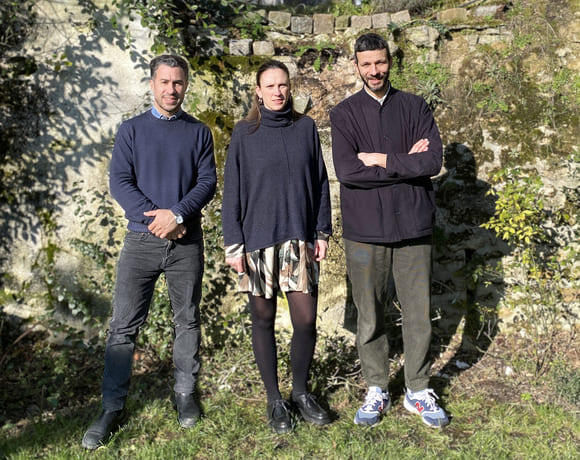
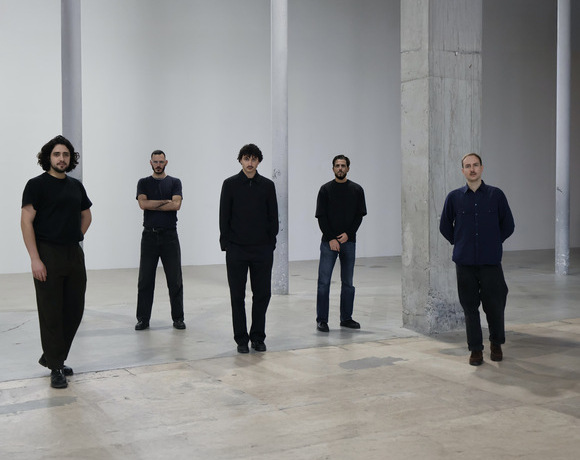
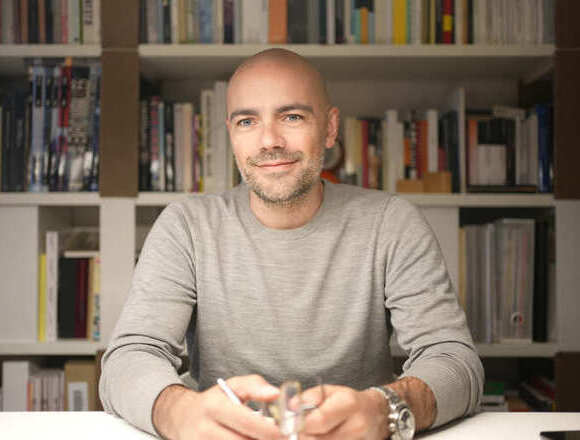
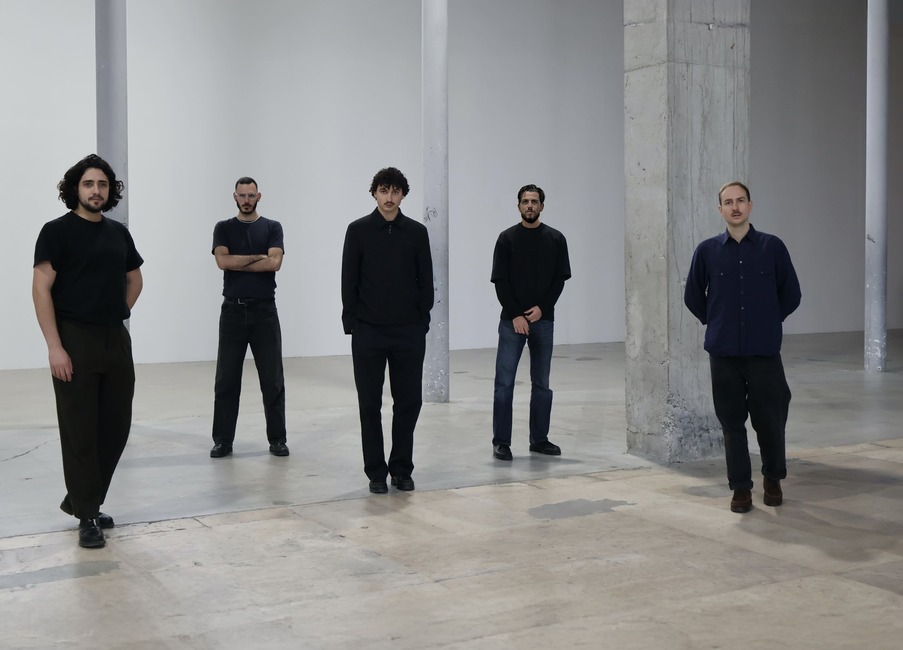
AJAM is an architecture studio born in 2021, founded by Joël Bastide, Florent Gadois, Lucien Magne, Loïc Moine, and Charles Pichon. The studio is based in Paris and Montpellier, and works on various scales, exploring, through experimentation, a diversity of programs and striving to shape and architecture that is intelligible and rooted in our times.
JB: Joël Bastide | FG: Florent Gadois | LM: Lucien Magne | LM: Loïc Moine | CP: Charles Pichon.
A generation in transition
AJAM: We believe our generation has a mixed perspective. On one hand, weâre shaped by the overwhelming amount of information and challenges coming our way. On the other hand, weâre deeply motivated to drive change and meet these evolving expectations head-on. So yes, thereâs a new wave of emerging architects, but itâs really a reflection of society as a whole. These arenât just challenges for architects; theyâre challenges for everyone.
This dual perspective often splits into two views: one alarmist, seeing crises as threats, and the other, while acknowledging the urgency, treats them as opportunities for transformation. We lean toward the second view. If people embrace change and see challenges as chances to evolve, we can create meaningful impact. Itâs not about being overly negative or panickingâitâs about turning current problems into progress. Facing these challenges isnât optional; itâs essential. Climatic, social, financialâeverything is shifting. We must recognise and adapt to this systemic change to move forward.
A practice in progress
AJAM: We met at the ENSAM (Ecole Nationale SupĂ©rieure d'Architecture de Montpellier) in Montpellier, in the south of France. In our final year, a municipality approached ENSAM with a mission, and the school trusted us to take it on. This project was the rehabilitation of a small and old train station along an abandoned track that had been converted into a greenway. The contracting authority wants to transform it into a rest area for cyclists. From this first collaboration, we decided to formalise our association. Before that, weâd been informally teaming up for five years, so it was natural to formalise our collective. After graduating, we continued collaborating on projects such as architecture festivals and workshopsâsmall-scale proposals that allowed us to build a common architectural vision and stay engaged.
Today, we continue to balance our time between AJAM projects and working in agencies in Montpellier and Paris. Learning from experienced architects remains essential to our development. While itâs not always easy, this combination allows us to grow, strengthen our skills, and gradually shape our vision for a fully independent practice in the future. Our setup is flexible for now. We each work at different agencies, gaining diverse skills and insights, which we bring back to AJAM. This collective knowledge strengthens our practice and keeps us connected. While weâre building something meaningful together, we want to take our time. For now, gaining experience from varied work sites feels essential.
Ephemeral starts
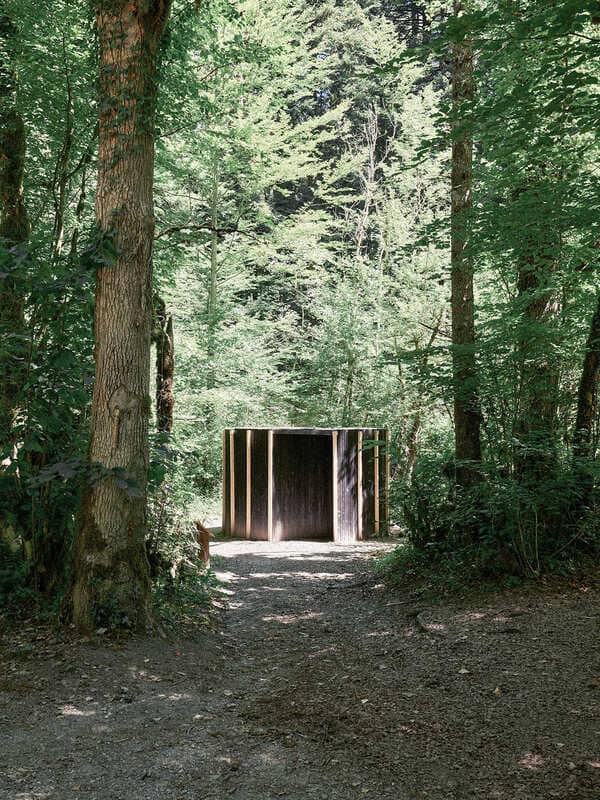
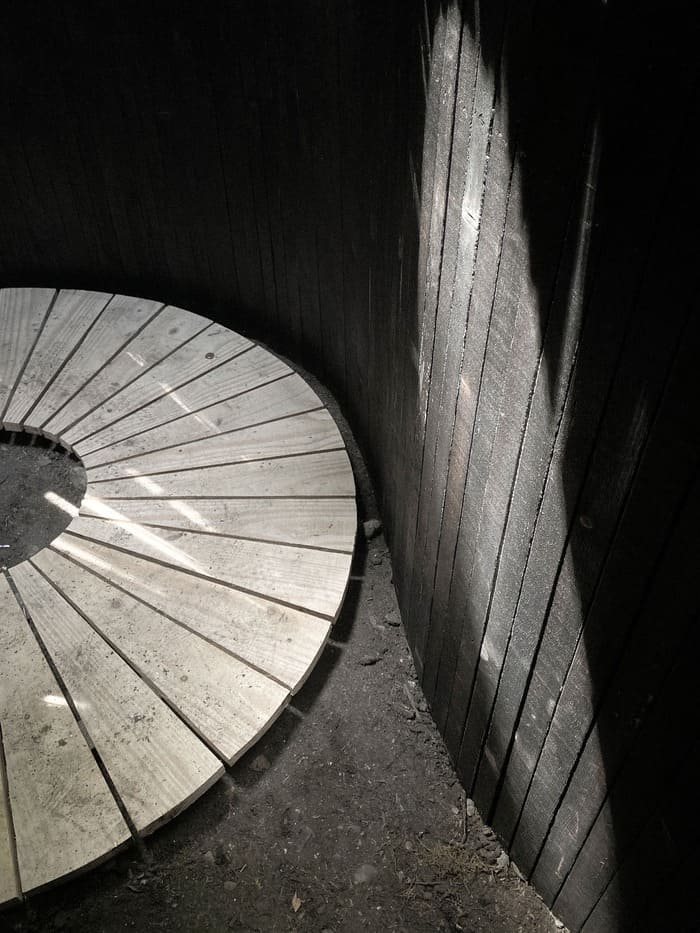
AJAM: Since when we were at school, ephemeral projects felt like an accessible way to explore and test ideas. Temporary projects offered us the freedom to experiment with concepts we might not have been able to try on larger scales. For example, during the Festival des Cabanes in Annecyâa gathering that invites architects from around the world to design and build temporary wooden structures in natural settingsâwe collaborated and experimented with construction techniques, using only locally sourced wood from the surrounding area. We experimented with techniques like burning and bending wood, even constructing a steam chamber on-site to shape it. The entire process became a hands-on exploration. We designed a cabin with an autonomous morphology. In plan view, we draw a pure form: a circle. We identify two notions through this composition. The first is the notion of centrality, the perception of a circular space that refers the being to itself. The second is the notion of verticality, a symbolic link connecting the earth and the sky. If we briefly talk about the architectural expression, it is mainly characterised by a structure signifying this quest for verticality.
The temporary nature of these projects also makes us think about sustainability and impact. Even with bio-sourced materials, we have to question the broader implications of our work. Small-scale projects like these let us explore ideas quickly and refine them with minimal risk, but the lessons we learn can often be scaled up. For us, ephemeral projects are a playground for experimentation and shaping the way we approach more permanent solutions.
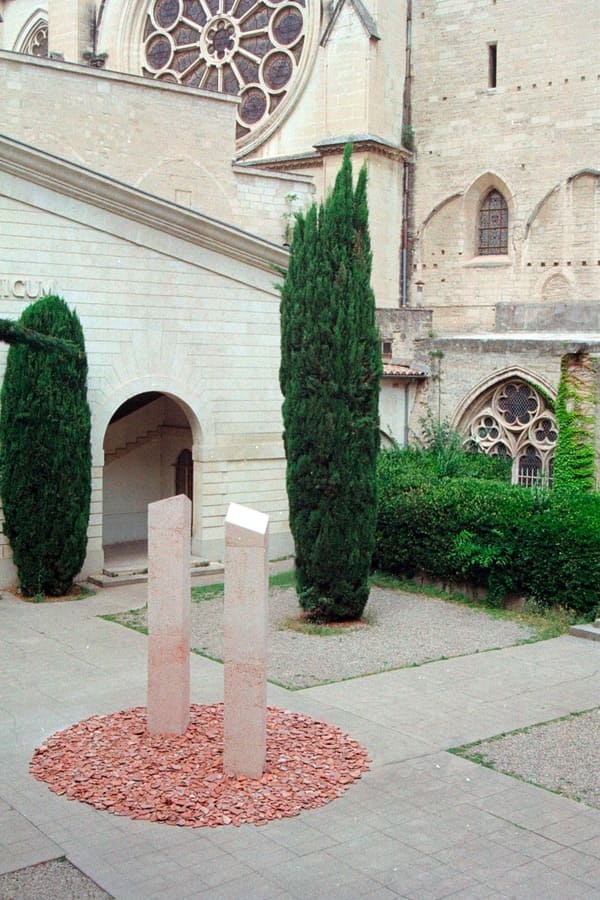
Another example is our proposal for the Festival de lâArchitecture Vive in Montpellier, where we had the opportunity to further explore the potential of ephemeral structures. For the festival, a specific theme is given at the outsetâin this case, we were invited to respond to the theme of âsacrednessâ. Our site was situated between an old medical faculty and the largest cathedral in Montpellier, making it an inherently sacred space.
Interestingly, this aligned with concepts we had explored in the Annecy project, such as the relationship between earth and sky. Here, we expanded on the idea of âsacrednessâ by connecting it to ritual. We saw a link between âdeadâ materials and sacredness, ultimately interpreting the monolith as a symbol of the sacred. Crystallising a dead material. Material can be removed from an intended function, becoming a dead material, without actually being dead. We believe in using this so-called dead material as a resource to crystallise new possibilities. We identified a valuable source within the vernacular architecture of the region: tiled roofs and various local demolition sites, considered as our material stock. After defining an experimental process and producing several series of samples, we succeeded in formulating a tile-based concrete made entirely from reused materials.
An experiential approach
AJAM: When it comes to our approach, we believe the term âexperienceâ captures our intent. First of all, we experiment with the design process. This process revolves around three key notions: place, material, and space.
When we talk about âplaceâ that means understanding a siteâs history and components, which is fundamental. We explore the temporal and spatial dimensions of a location. âMaterialâ responds to human aspirations. We focus on their texture, composition, and characteristics to shape our architectural expression. âSpaceâ must be clearly defined in relation to its inhabitantsâwhether as neutral, defining, flexible, or evolving spaces. Though currently focused on these three aspects, and that which allows us to work collectively, our approach remains open to evolution, allowing for future growth and refinement. Experience is also talking about experimenting in a crisis context, engaging reflections on flexibility and adaptability with a long-term vision, we want to explore transformationsâspatial situations, aesthetics, narratives, temporal layersâand also experiment with materials and construction systems. We also talk about practicing and cultivating the experience. Practicing through several constructive processes we have personally practiced, we enjoy it. And cultivating through every past experience that influences the new oneâreferences, personal experiencesâand shared visits, building a shared culture.
A tower from fragments
AJAM: One project that reflects our design process is a competition proposal for the Barrage de Malpasset. We began by reflecting on the essence and layered history of the site. Located near FrĂ©jus in southern France, the area is shaped by the Reyran River, known for its hydrological fluctuations. In 1952, a dam was built, creating the artificial Lake of the Reyran. However, just five years later, heavy rainfall led to the damâs collapse, causing a devastating flood that left lasting physical and psychological scars on the region.
Our challenge was to reframe the perception of this siteâtransforming chaos into potential. Focusing on the ruins of the dam, we explored how these massive fragments could serve as a foundation for something new. This led us to design a neutral space, one that prioritises simplicity and liberty. The space consists of platforms that provide a versatile framework for individual or collective use. To address this plurality of scenarios, neutral surfaces are multiplied. By multiplying these platforms, we introduced verticality, creating a dialogue with the siteâs history and contrasting the horizontal nature of the dam.
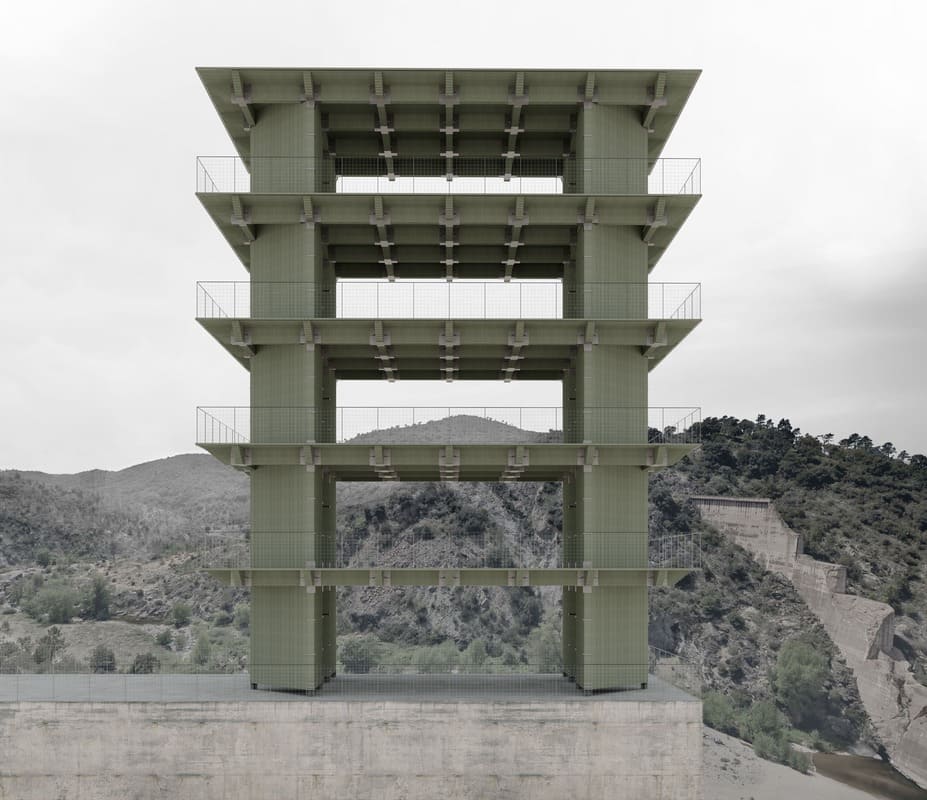
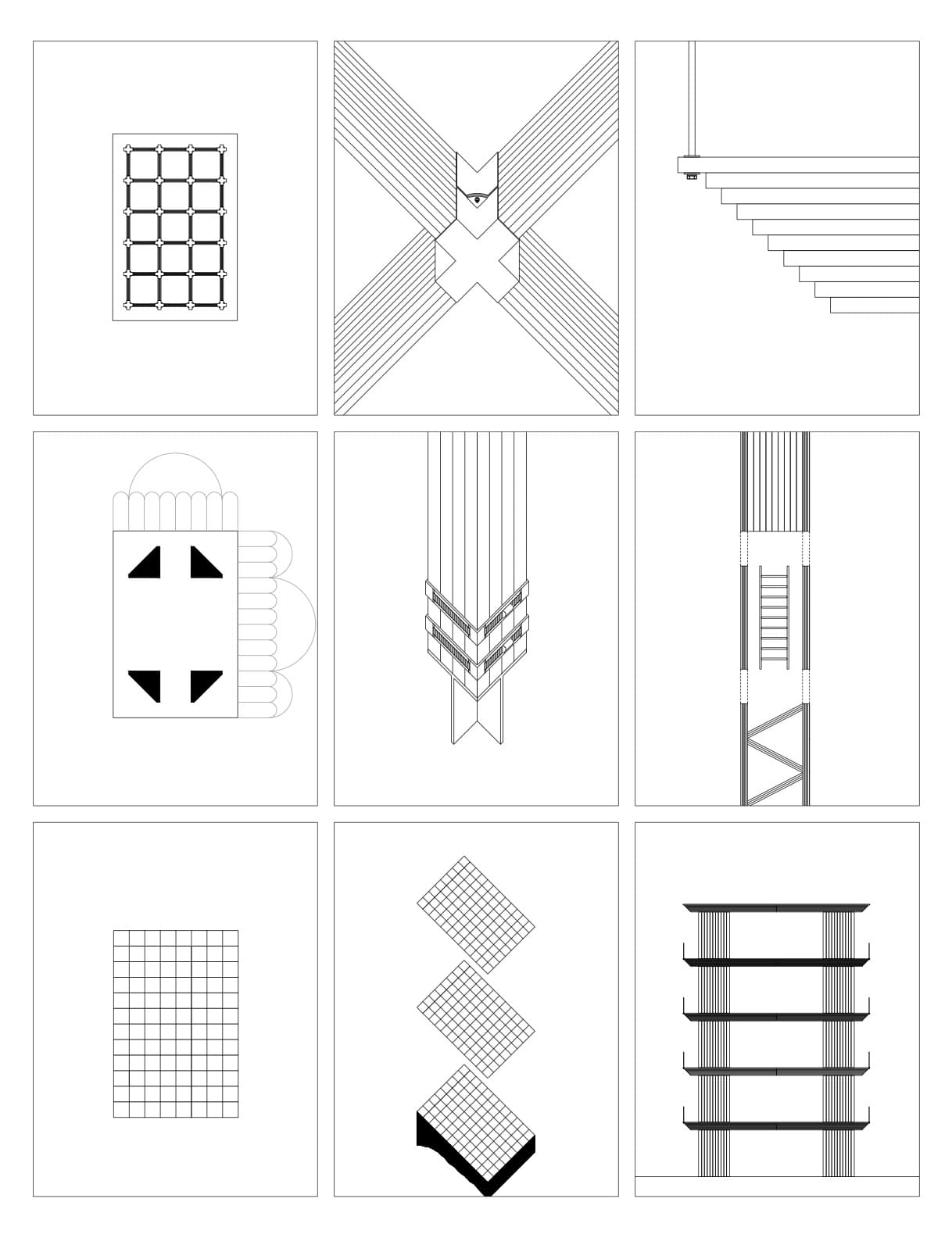
The verticality of the design symbolises a response to the damâs collapse, representing a rise from the chaos. This shift in perspective inspired the creation of a tower-like morphology. The structure is composed of modular units: four pillars supporting a waffle platform, repeated across five levels. The pillars also serve as vertical circulation, connecting the different levels while allowing for varied interactions with the surrounding environment.
The project seeks a balance between an architecture that is profoundly soaring up and one that remains silent, revealing no clear functions. The towerâs morphology extends vertically from the ruin, with its programmatic neutrality reducing architecture to its essence: structure. The project was part of a competition for young architects, with the condition that the proposal had to use wood as the primary material. We were drawn to this site because of the massive, abandoned concrete damâa structure with no current utility. Our goal was to repurpose this infrastructure. This reflects a broader principle we value: consider reusing what already exists, rather than starting from scratch.
The starting point for us was materiality. We worked with a large, heavy concrete element and wanted to juxtapose it with something light, like wood, along with even lighter components such as small cross-sectional materials. The idea was to explore how we could create a sense of massiveness using lightweight materials. This led us to layer smaller elements, opposing and assembling them using galvanised steel connections. The result was an âembroideredâ systemâsimple to execute while maintaining structural strength. The small scale of these elements allows for a variety of wood types, resulting in a hybrid structure adaptable to multiple contexts and regions. The hybridity of the structural system allows it to develop its universality. The choice of small cross-sectional materials is a solution to current environmental and socio-economic issues by ensuring a balance between production and ecosystem protection and a consistent activity in the timber industry.
The wall, a catalyst of intensification
AJAM: In 2023, we participated in the Europan competition, focusing on a project of a larger scale. For this edition, we chose to work on the site of Guérande. This area holds a strong identity, rooted in its geographical location and centuries-old cultural heritage. While this history enriches the town, it also creates limits in terms of development and its relationship with the surrounding territory. The city is attractive, but the places of intensity are concentrated in very specific spaces. Yet the city of Guérande is enmeshed with open spaces, which are nowadays underused. The potential is there. The project advocates an intensification of the existing spaces to support a reading and respect for the different landscapes and to see Guérande again as a living city.
The project Support Sur Pierre recreates the city through the presence of the wall, symbol of the medieval city, resources, and the local composition. The project is a fragmentation of a unique and circular element. The wall of the city becomes plural. The fragments of wall scattered in the city draw a new vertical landscape. This architectural element is used like grafts and urban staples.
Thus, each public, built, or landscaped space has a wall. It is not limited to the medieval city nor to mark the centre. These elements linked to places of existing intensities turn into high-traffic places. The city then becomes the centre of different identities and stories, linked by a chain of major places. This urban framework represents neither a single route nor a path, but the possibility of travelling from place to place, potentially without depending on the car.
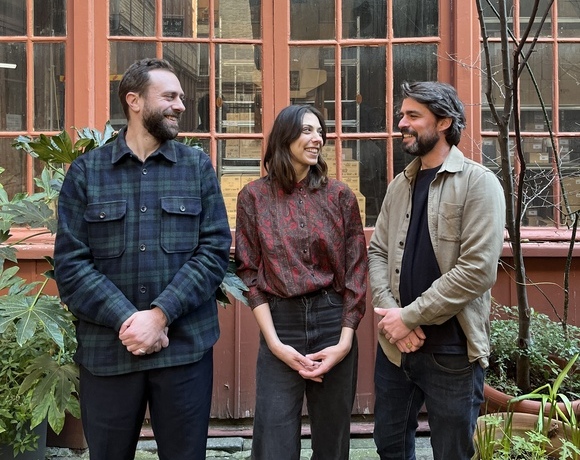
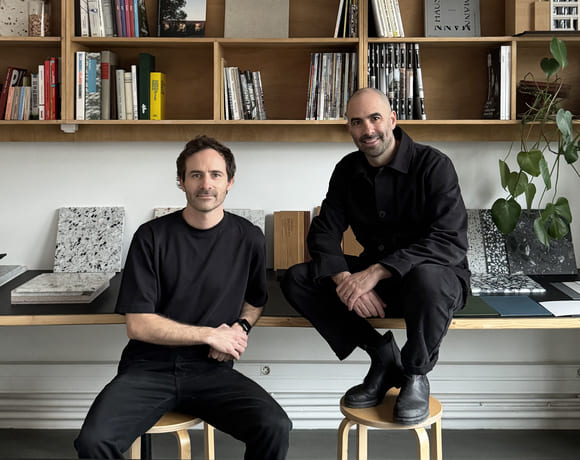
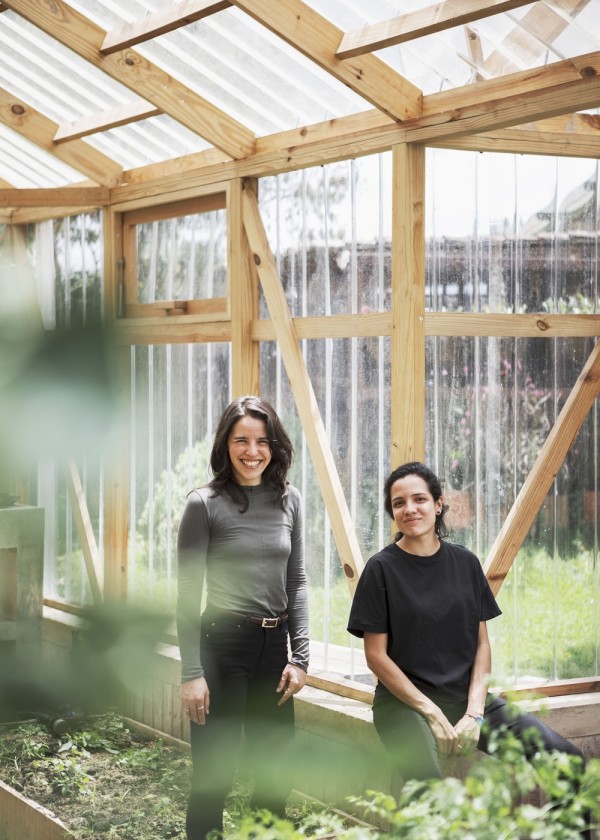
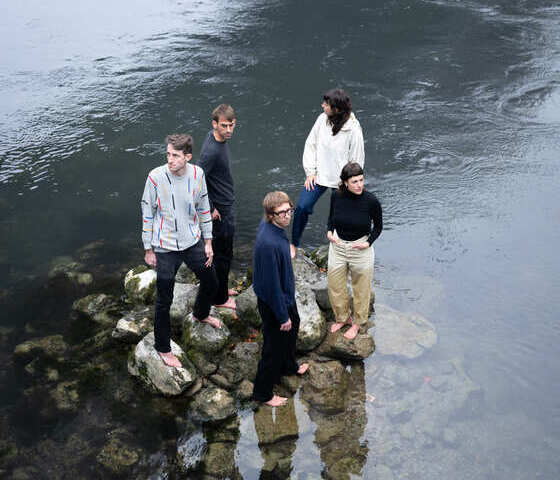
âĄïž AJAM. JoĂ«l Bastide, Florent Gadois, Lucien Magne, LoĂŻc Moine, Charles Pichon. Ph. AJAM
âĄïž FDC_005, Chevaline. Le Festival des Cabanes, Between Architecture and Landscape, 7th edition. Ph. David Foessel
âĄïž FDC_005, Chevaline. Le Festival des Cabanes, Between Architecture and Landscape, 7th edition. Ph. AJAM
âĄïž FAV_013, Montpellier. MatiĂšre Morte, Festival des Architectures Vives. Ph. AJAM
âĄïž CCB_020, Malpasset. Barrage de Malpasset, transformation of a modern ruin. Img. AJAM